
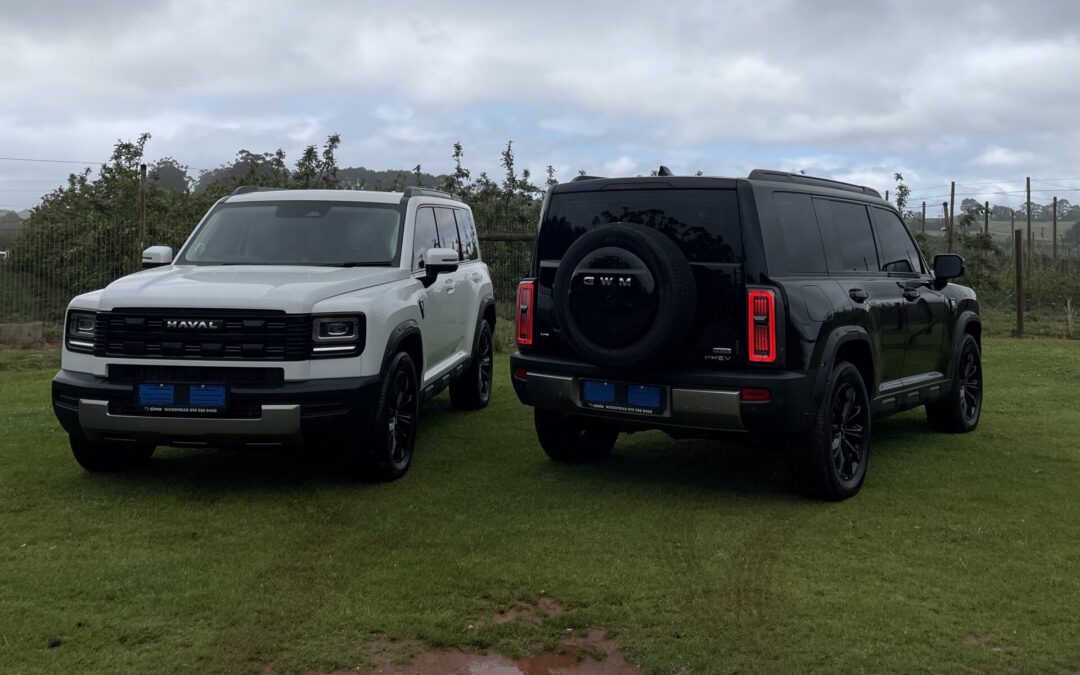
GWM has just introduced a new iteration of the Haval H7, and this revitalization comes with new looks, more technology, more off-road capabilities, and, more importantly, a variety of engine options to choose from. We had an opportunity to get behind the wheel of the vehicle to assess if it drive different, watch it on here.
The looks of the H7 change
The H7 quickly fell behind its peers in the industry and didn't enjoy registering many sales as its closest rivals have enjoyed since its inception into our market early last year due to the vehicle not having as much appeal and being awkwardly priced next to more visually appealing models for the same amounts, and in some instances, customers experiencing a backlog and issues in terms of after-sales assistance. Now, though, GWM has given the formerly unpopular model a popular body style that most, if not all, desire since the vehicle drops its previous exterior design to take on a more boxier exterior, which has put the likes of the T2 in hot conversations.
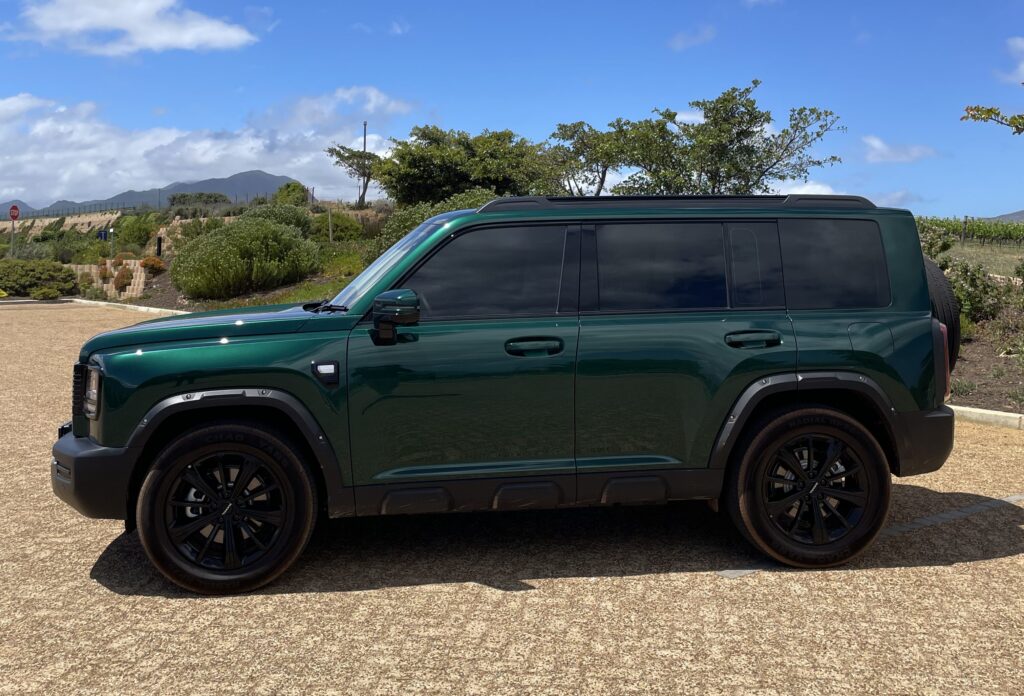
The car also grows visually and in dimensions since the new GWM Haval H7 is 95 mm longer, 42 mm wider, and 63 mm taller than the outgoing model. This H7 nows measures at 4,800 mm long, 1,950 mm wide, with a 1,843 mm wheelbase and an unchanged height of 1,843 mm.

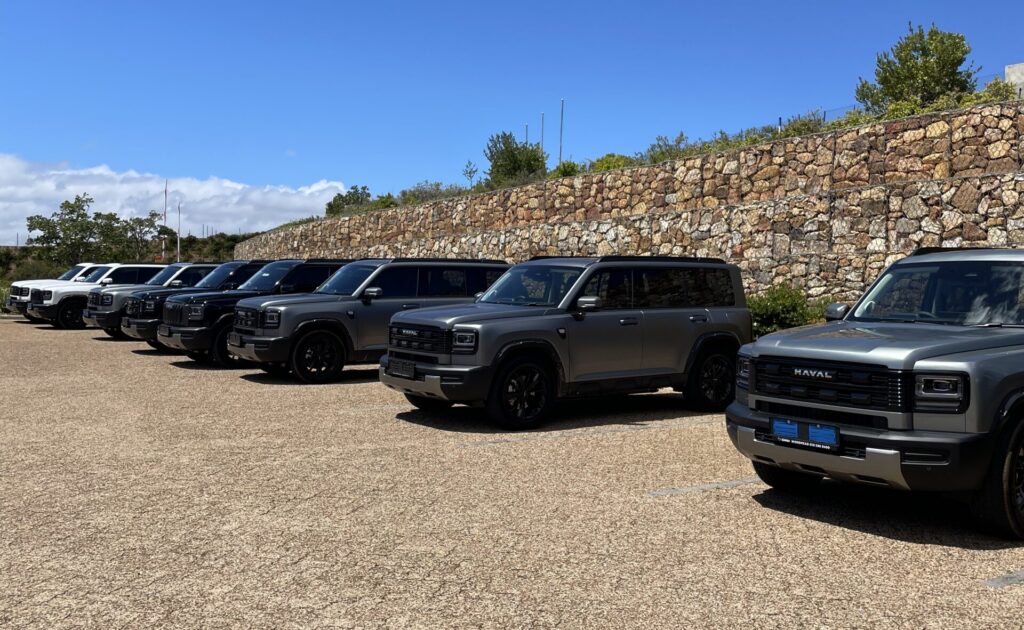
Changes on the outside start at the front of the car where the vehicle carries over similar prominent circular LED headlights with integrated DRLs framed in dark trim, a new bold big grille that has two design which help give the ICE models and HEV models distinctive from each other from face value.
The upright and boxy car shape is highlighted by roof rails, black accent cladding, 19 inch alloy wheels that are standard but gain a gloss black hue in higher trim levels. Some more side profile elements to note is the impressive 210 mm ground clearance, configured with a 25-degree approach angle and 32-degree departure angle for a commanding presence.
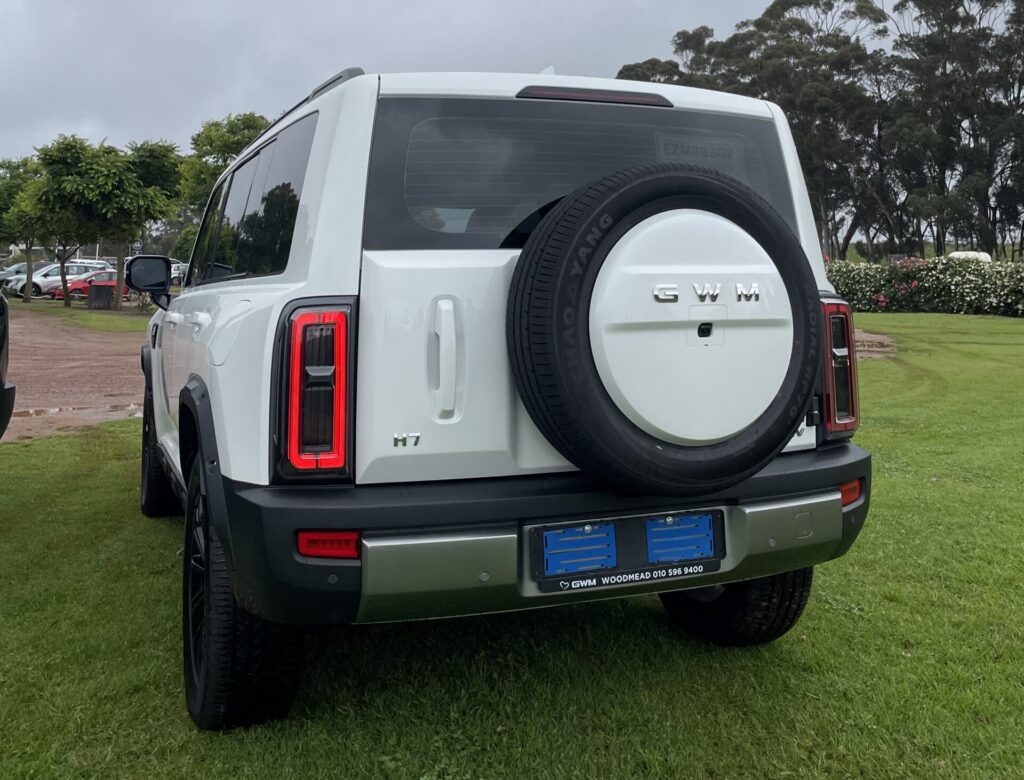
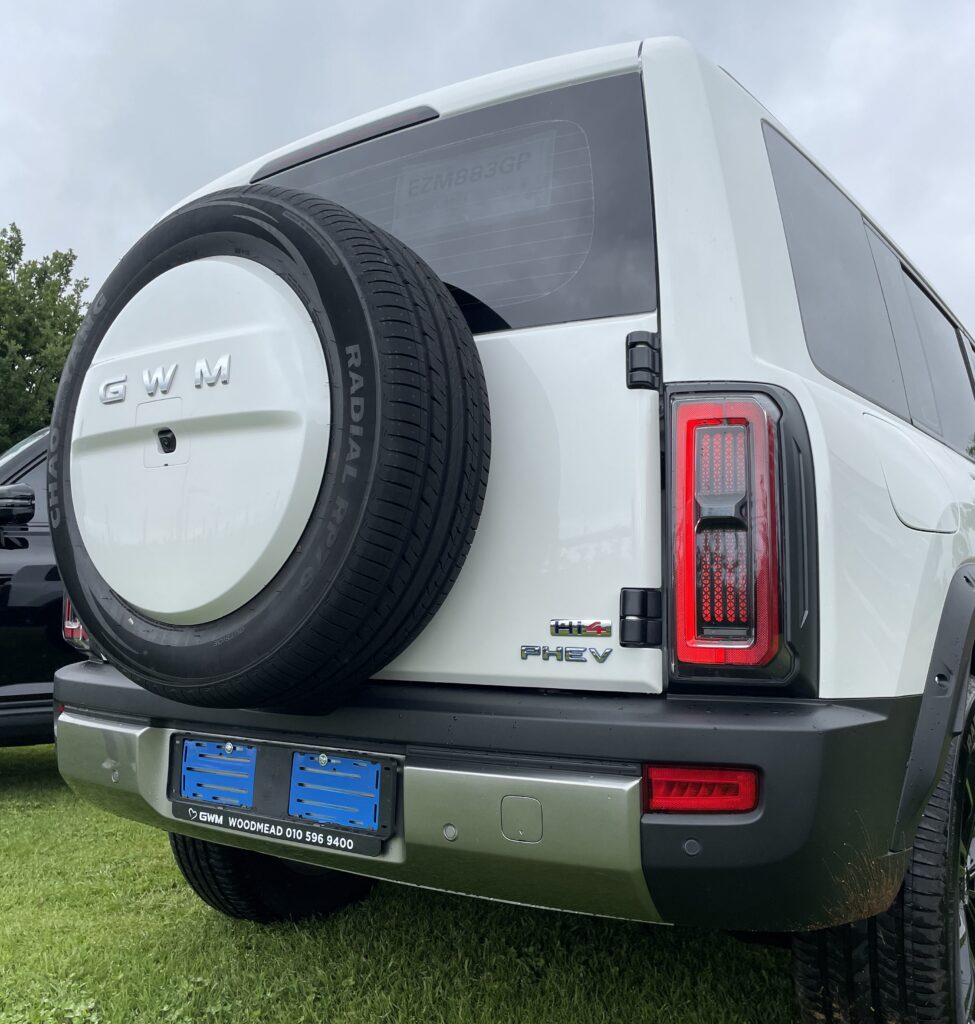
Moving on to the rear, we now get a rear mounted spare tyre which makes the car look more rugged but becomes a bit of hinderance when driving as it makes seeing out the rear a challenge. Back here you have more modern, distinctive rear LED signatures which are a well welcome upgrade as the outgoing model only had halogens rear light. Silver skid plates on the front and rear bumpers to complete the rough-road look.
Inside, there is more headroom and storage space
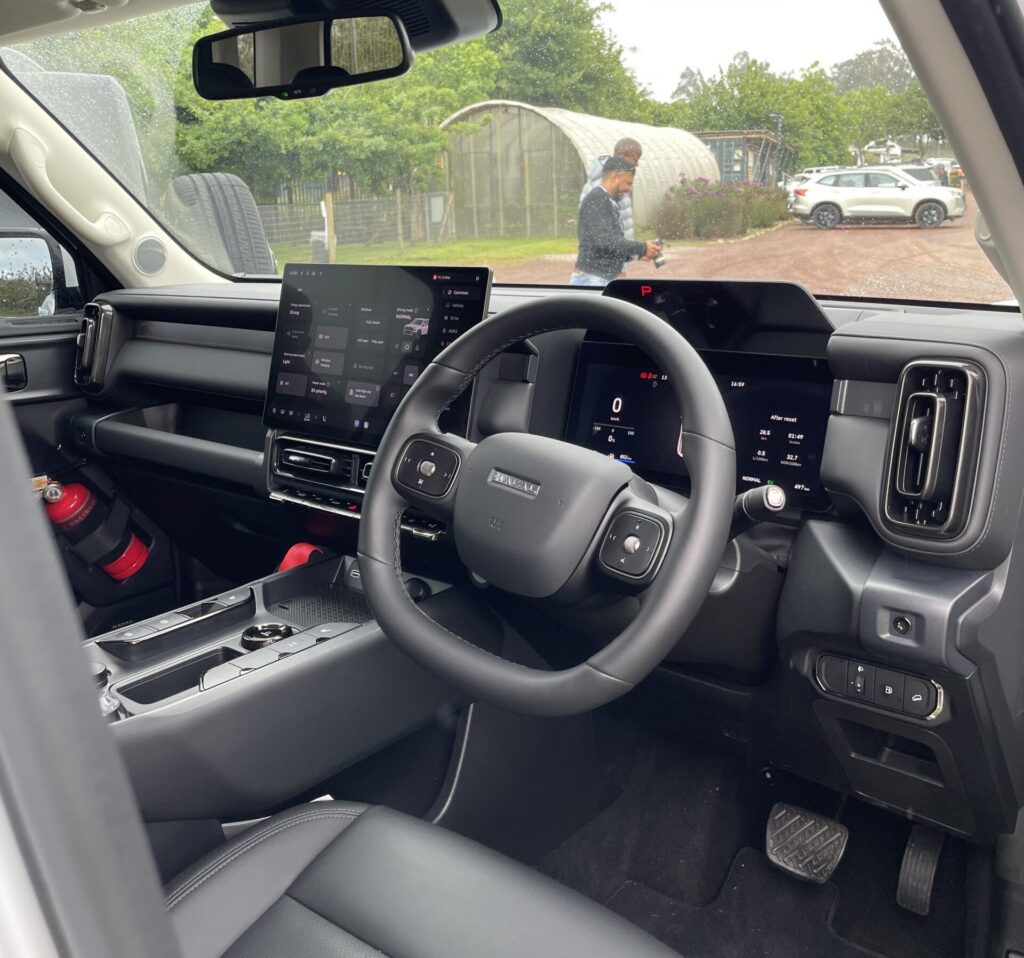
Thanks to a slight growth in the wheelbase and length of the vehicle, it allows for a little more room for passengers and belongings to sit snug and comfortable. But first, it is best to highlight how the vehicle has grown to become much technologically up to date and minimalistic just like the other GWM products.
The interior is dominated by a a massive 15.6-inch anti-glare, anti-fingerprint touchscreen infotainment system running GWM's Coffee OS, accompanied by a crisp 12.3-inch digital instrument cluster. Further down the center console the gear level moved to behind the steering wheel leaving only a driving mode selector and a big and fast wireless charger with integrating phone cooling.
Boot space has also experience an upgrade as it now offers 586 litres of cargo volume in its standard configuration. This further grows to 1,404 litres with the rear seats folded down and GWM says the seats themselves fold in a 60/40-split. Seating which is electrically adjustable for the driver but for everyone in higher trims is finished in a black leather upholstery and comes with seat heating and ventilation on higher grades.
Safety
The H7 comes standard with six airbags, including side curtain airbags, and is built around a body structure using high-strength steel, with reinforcement in key areas. A 13-sensor suite underpins a Level 2 driver-assistance system covering automatic emergency braking (capable of bringing the vehicle to a full stop from 50km/h to avoid stationary obstacles), full-speed adaptive cruise control with lane centering, lane-keeping and departure warnings, blind-spot monitoring, rear cross-traffic alert and braking, and a 540-degree camera system with a transparent-chassis view for low-speed maneuvering.
Powertrain: Three Ways to Drive
The H7 will be offered across six derivatives spanning three powertrains, each built for a different kind of ownership:
1.5T PHEV (Hi4) - Available in two states of tune. The 2WD derivative combines 240 kW and 540Nm (8.4s 0-100km/h, 130km NEDC electric range), while the range-topping Hi4 4WD derivative lifts this to 280 kW and 670Nm (5.8s 0-100km/h, 115km NEDC electric range), with the ICE engine available as backup for longer journeys, removing range anxiety while still offering an electric-first experience. Both PHEV derivatives support V2L external power discharge, up to 6kW.Haval H7 Range Pricing:
2.0T ICE - GWM's self-developed 4N20A turbo-petrol engine produces 170kW and 380Nm, paired with a self-developed nine-speed wet dual-clutch transmission, a world-first in a transversely mounted application. 0-100km/h comes up in 9s seconds on the 2WD derivative and 8.6 seconds on the 4WD, with a 200km/h top speed. This is the outright performance option, aimed at buyers prioritizing response and towing capability.
1.5T HEV - A dedicated 1.5T hybrid engine and two-speed DHT gearbox combine for 182kW and 540Nm, reaching 100km/h in 8.6 seconds while returning a claimed 5.3 litres/100km(NEDC) at minimum state of charge. Aimed at buyers who want reduced fuel consumption and stronger low-speed responsiveness without the commitment of plugging in.
GWM has also given the H7 a great sense of off road capability for the 4WD model variants as can be seen with the presence of a BorgWarner Haldex sixth generation electronically controlled 4WD system, redistributing torque between the front and rear axles in as little as 200 milliseconds to maintain stability on loose or slippery surfaces. The range-topping PHEV derivative instead uses GWM's Hi4 system, which drives the rear axle electrically via a dedicated 150kW motor, shifting the vehicle's weight balance rearward for improved traction and a notably quick 5.8-second 0-100km/h time.
Pricing and warranty
- 2.0T SUPER LUXURY 4X2 9DCT : R 554900
- 2.0T ULTRA LUXURY 4X2 9DCT : R 594900
- 2.0T ULTRA LUXURY 4x4 9DCT : R 654900
- 1.5T HEV SUPER LUXURY 4x2 DHT : R 624900
- 1.5T PHEV SUPER LUXURY 4x2 DHT : R 734900
- 1.5T PHEV ULTRA LUXURY 4x4 DHT : R 794900
The all-new HAVAL H7 is backed by a 7 Years / 200 000km Warranty, 7 Years / 75 000km Service Plan and for the Hybrid versions, a 8 Years / 150 000km Battery Warranty. Additionally there is a 7 Years / Unlimited km Roadside Assist.
Editors note
GWM and all the other Chinese brands are interestingly refining and ironing out some kinks in their production while positioning themselves to be more inclusive to consumers at all different ends of the market. The H7, in particular, follows in the footsteps of the Ora model, which did not receive the expected response from the market due to its timing and pricing at the time; however, this first failed attempt didn't mean they stopped. Instead, for them, it meant going back to the drawing board.
The H7 was quickly overshadowed by some other new Chinese entrants from rivaling brands that offered just a bit more in terms of kit, packaging, and, you can't forget, styling. But with this new boxier shape, which the people of Mzansi usually gravitate toward, and the adaptation of more engine options, it should be just what the car needed. We shall see.