

The dawn of a new era has begun at Porsche with the official unveiling of what might be the third member of the new Holy Trinity, the Mission S. The Mission S was unveiled at a pier in Queens, New York, paying homage to the the mid-engined 1953 Porsche 550 Spyder which is the first model that is said to have brought about the great fame that Porsche has become today.
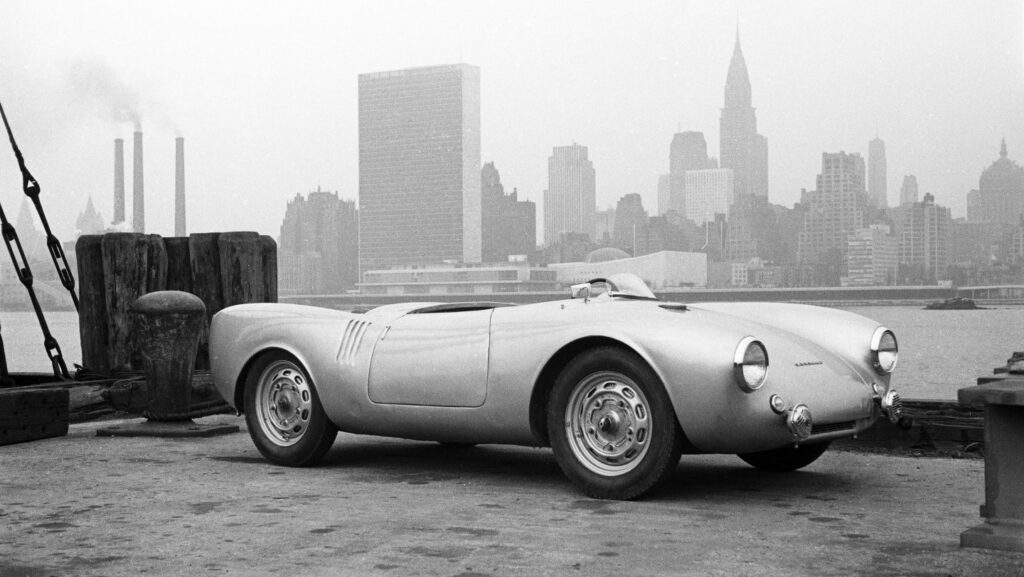
Already that must tell one that this Mission S has some big shoes to fill but judging from the fact that it was revealed at precisely the same or similar venue as the Spyder was shown and it too shares a mid engine configuration, it very well may be on the right track. The most exciting thing to note is that this is not just another one off 911 based vehicle wearing a redesign body kit but a new flagship model that will sit atop the Porsche stable for all (not really) to own, joy!
“At the same time, the Mission S represents a mid-engined super sports car platform positioned above the 911 – not as a one-off hypercar, but as a permanent and versatile addition to our customer offering,”

Authentic, consequent and timeless: these three terms set the strategic framework for the further development of Porsche's iconic design identity. “The Mission S is the result of a forward-looking, holistic design strategy,” says Tobias Sühlmann, Vice President Style Porsche. “This vision model illustrates a fundamental strategic direction that we will soon be translating into our future product portfolio.”
Authentic, consequent and timeless
The Mission S combines a powerful mid-engine super sports car platform with a clear design language inspired by historic Porsche icons. The whole look of the vehicle follows the three terms Authentic, consequent and timeless to help bring it into life and to what we see, the car keeps the evolution of revolution concept but gave the Mission S a splash of authenticity, at first glance it looks like a Marc Philipp Gemballa Marsien GT.
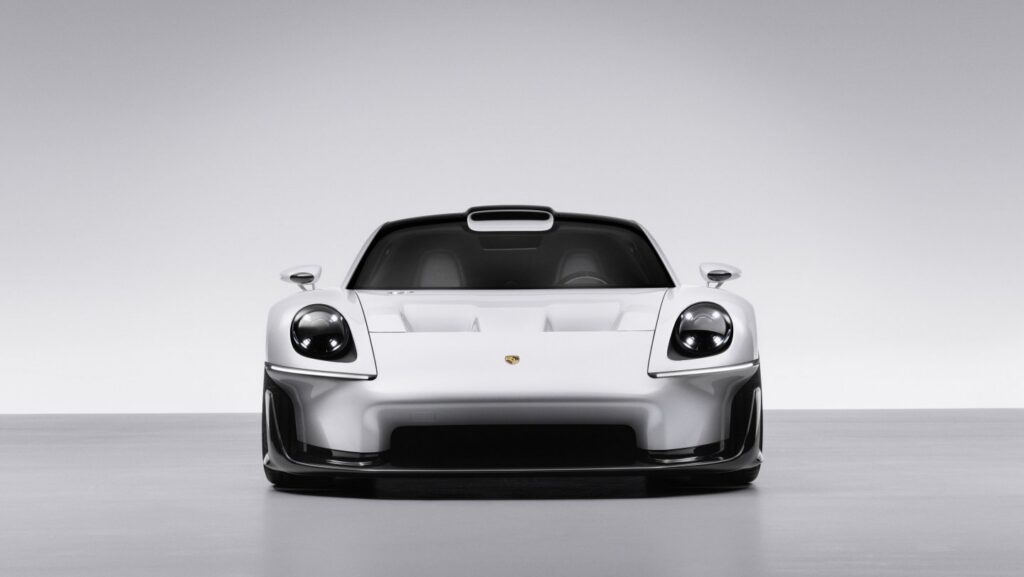
The front is most recognizable as the it features the brands unmissable round headlight signatures that recall iconic models paired with a flat, low nose inspired by the legendary Porsche 911 GT1. But then things get a bit bizarre as the introduction of torpedo-style" front fenders enter the chat giving the vehicle a meaner and more pronounced stance, positioned below the headlights and front fenders are unique design graphics integrated so the driver can clearly see the front corners and wheels from inside the cabin.
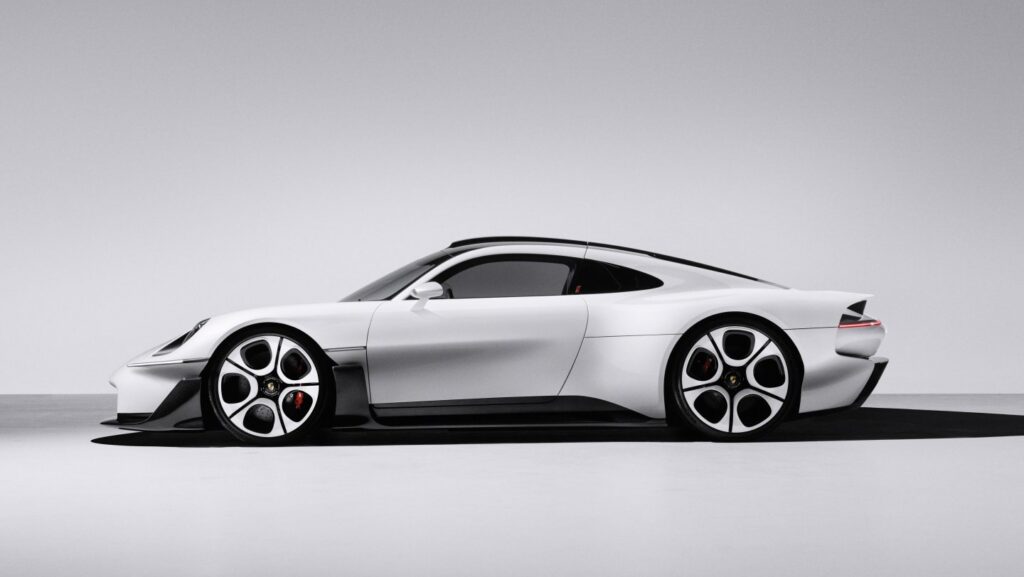
The side of the vehicle is most radical, because of its engine layout and positioning, this allows the car to obtain a a long, low, and wide stance with a sweeping "flyline" roof profile reminiscent of classic Porsche racers. As a means of managing and directing airflow, Porsche has gone ahead a neatly sculpted air channel indentations leaving a massive open channel behind the cabin doors that swallows rushing air, directing it cleanly around the flanks of the car and funneling it straight into the active rear wing.
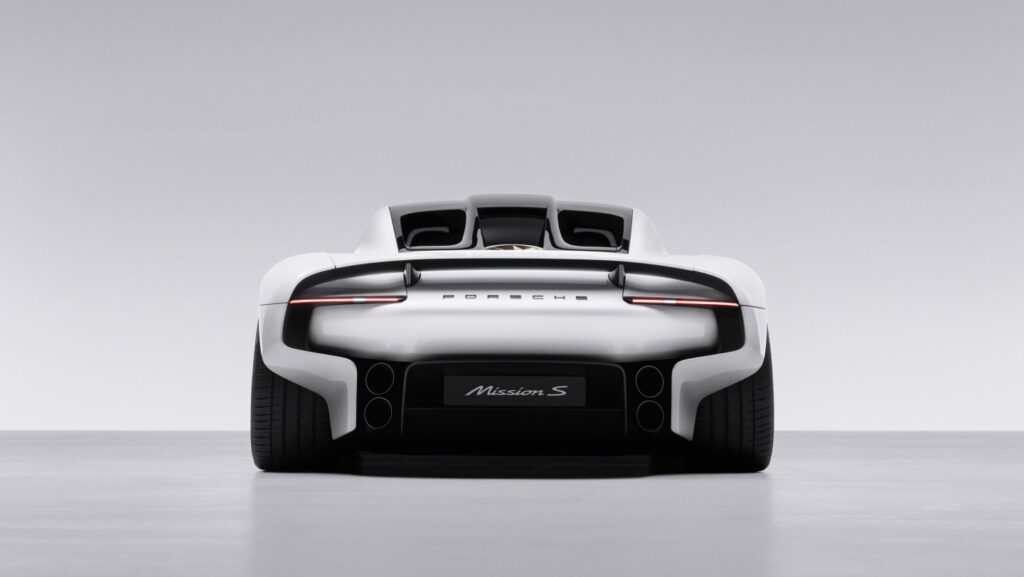
The rear adopts a car-in-car design language, as the back has a large surround that almost looks like the vehicle has a ballerina tutu in the form of big surrounding air pockets and a spoiler. The inner parts of this space debut a rear light strip, or light bar, which sits separate from the fully integrated active rear wing that automatically adjusts to balance downforce and drag.
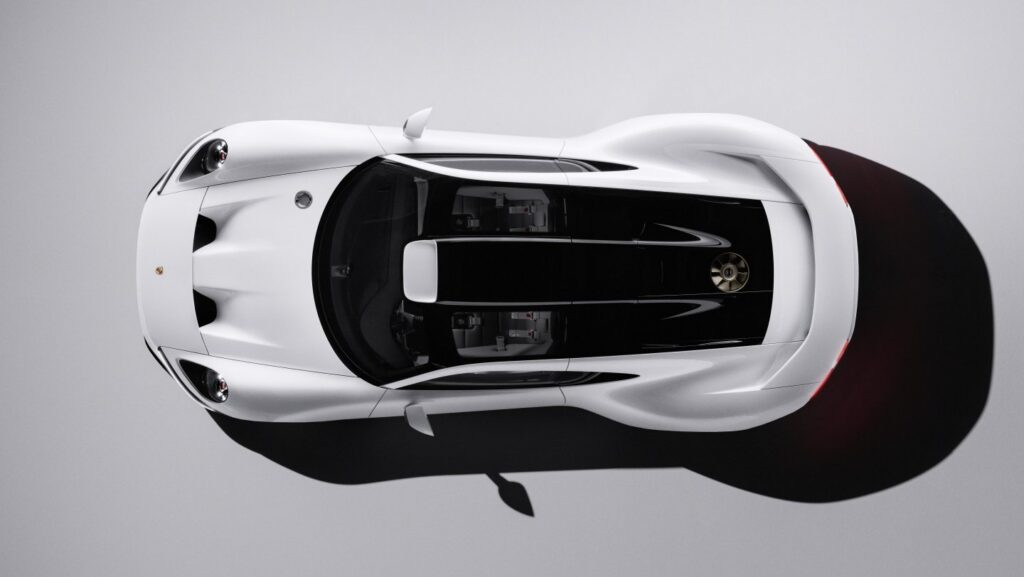
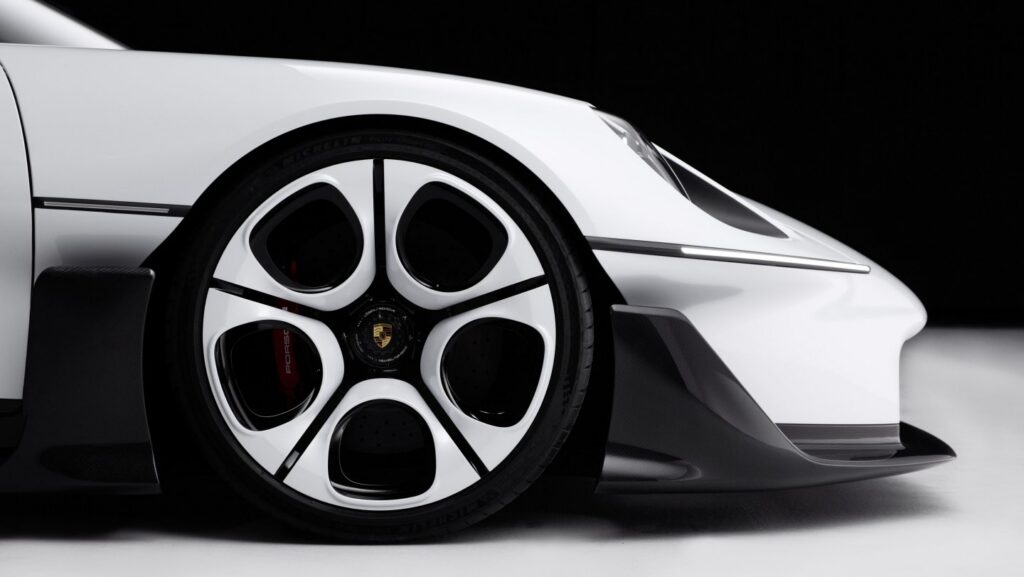
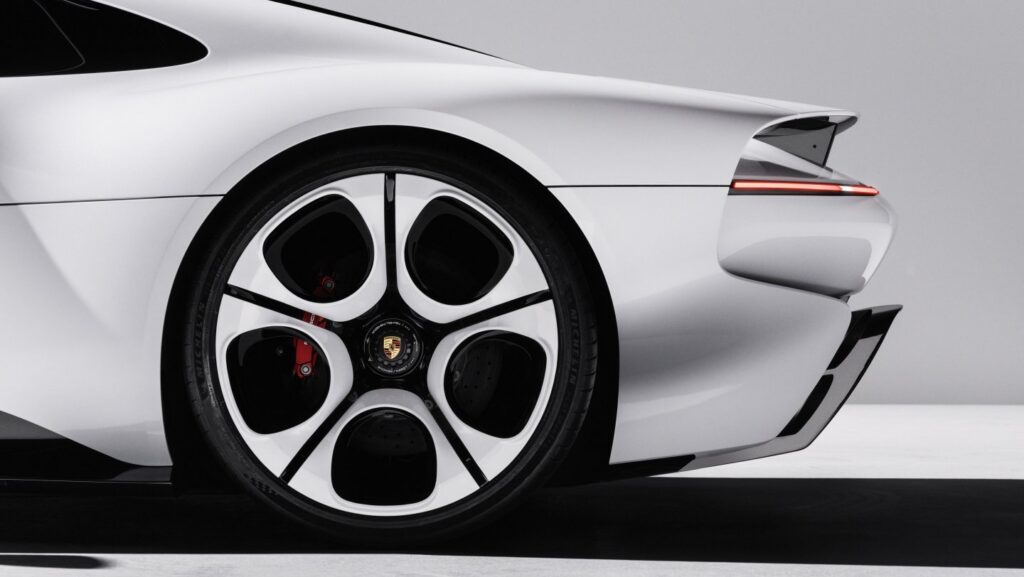
Some more exterior elements that are worth noting are the dial design wheels fitted to the model, which nod to the brand's iconic Porsche 928 grand tourer. A hoodscoop - if you know anything about the era of the early 2000s, especially in car gaming-you will know that this modification was always the coolest thing to go for. Cool indeed, since this air duct channels air to all the appropriate areas that need it, including the lightweight fan or pebble section wheel visible at the rear of the car, which draws out heat from the mid-mounted engine bay to assist the radiator setup.
The cabin of the Mission S is more driver focused than any other Porsche out there
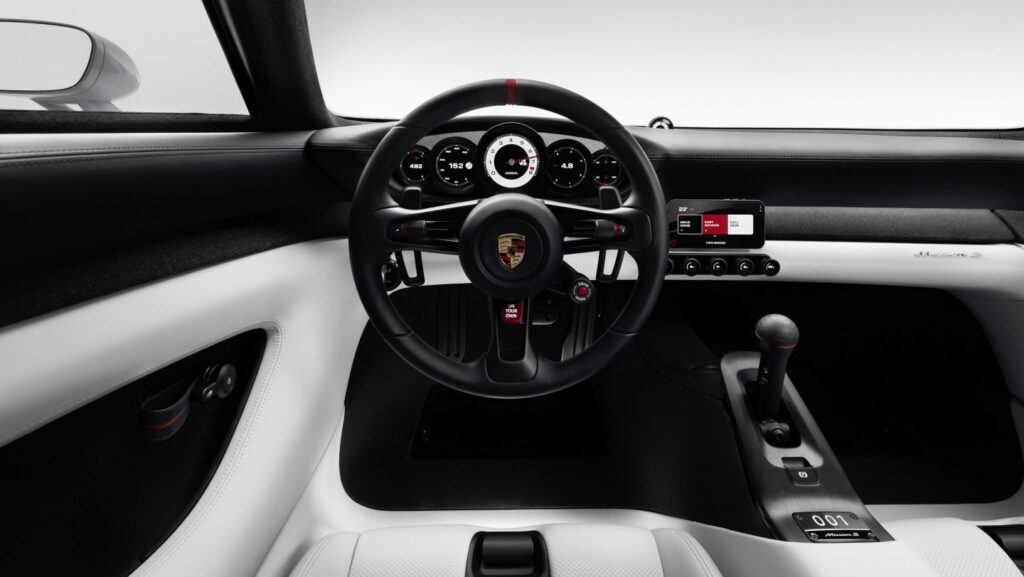
Tactility and analog placement have been emphasized in the cabin, as there is almost no sign of digital tainting, a moment to celebrate for all the car enthusiasts out there. Inside, the focus is on purism, driver-oriented ergonomics, and a forward-looking symbiosis of analog and digital controls. The deliberate reduction of digital surfaces focuses on direct interaction between driver and vehicle ; emphasis here is placed on the driver, as can be seen with no screens at all. The whole cabin is filled with switches, buttons, and knobs.
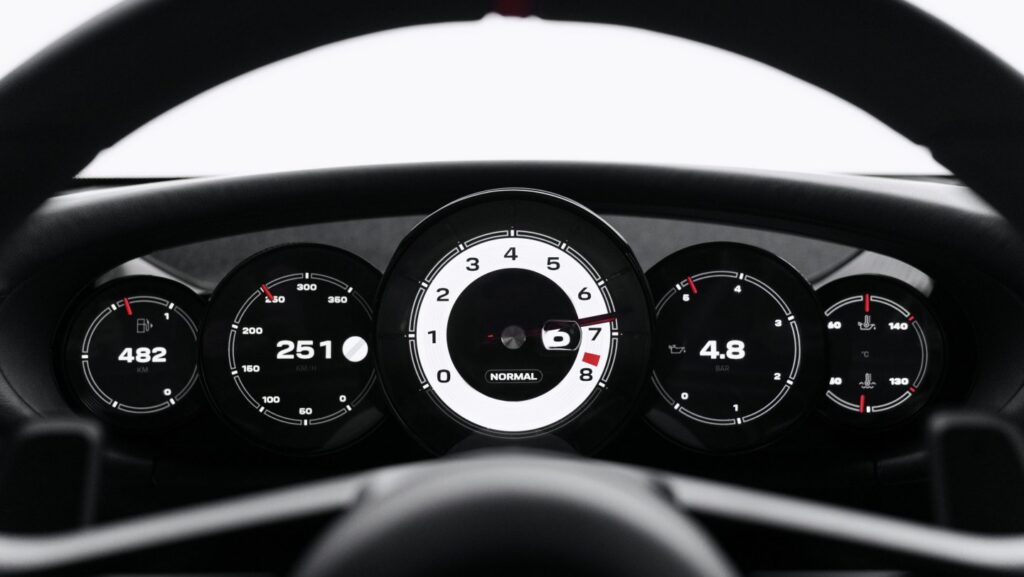
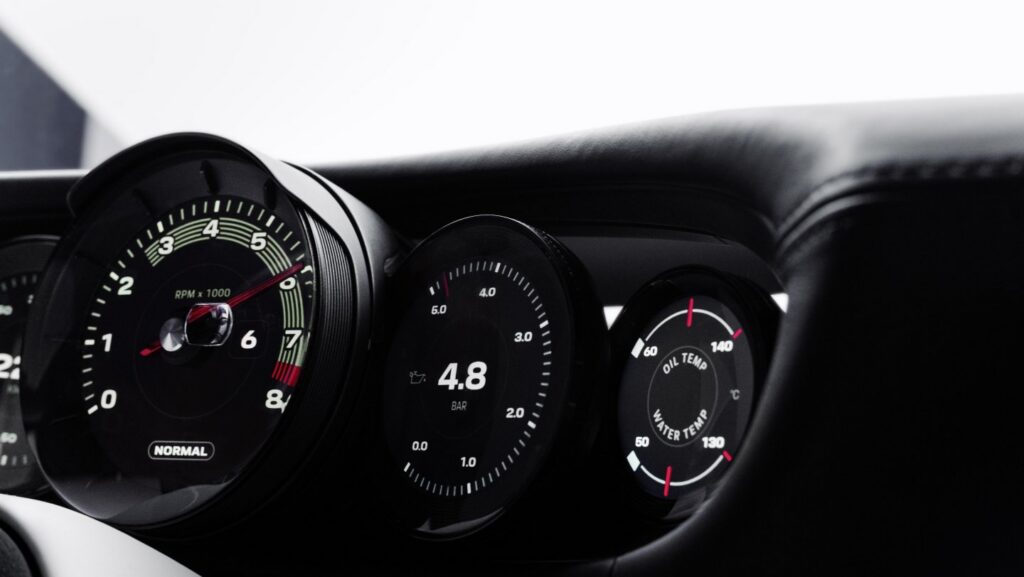
In front of the driver are five characteristic round instruments behind the steering wheel, a set of individual clusters that house systematically aligned dials showcasing speed, revs, and G-force. The arrangement of the round instruments also adapts to the selected drive mode, with the tubes positioned either side by side or behind one another to meet the needs of the driver, depending on the mode selected.
There is no infotainment screen unless you want one to be there, not because you opt for it, but rather because it is always in your pocket. The dashboard features a retractable smartphone holder embedded with Apple MagSafe technology. The driver simply attaches their iPhone, which seamlessly integrates to handle the vehicle's navigation, mapping, and telemetry via the My Porsche application.
There were a lot of pants and moans about newer Porsche 911 models losing the ability to crank up the car to start it and now having to push a button, gut-wrenching stuff. Porsche has somewhat heard your cries and decided to fit an old-school traditional physical aluminum ignition key to the left of the steering wheel, requiring a tactile twist to fire up the car.

Again, many were left simply unimpressed by the omission of a gear level in exchange for one of those weird small, stubby electronic shift-by-wire "nubbin". The Mission S instead offers up a height adjustable and entirely mechanical gear selector that is confirmed to have both PDK (from reveal) and three pedal configuration (later in the launch phase).

Bucket seats will do in the cabin for the driver and the passenger, which come with seat belt buckles that are seamlessly integrated directly into the center bolster of the sports seats rather than sitting loose in the footwell. To keep occupants strapped to the seats, there shall be a track-ready five-point racing harness, complete with a Porsche crest emblazoned across the bottom buckle.
The oily bits
First thing to note, the Mission S rides on a completely new, highly flexible mid-engine supercar platform. Porsche’s CEO, Michael Leiters, explicitly confirmed that this platform is being developed entirely in-house by Porsche, for Porsche. It will not be shared with sibling Volkswagen Group brands like Lamborghini or Audi.
The bit that everyone wants to hear is that this platform has also been confirmed to only support a gasoline-powered engine bay. But judging by the strict emissions rules and regulations out there, do not be too shocked if the final product has a bit of hybridization taking place in the system.
Porsche had every single person in attendance at the reveal on the edge of their seat in anticipation to hear what exactly that power source would be. You see, there was a huge rumor going around since Porsche's technical partner RUF Automobile unveiled a massive 4.8-liter, 8-cylinder prototype boxer engine, which could be the heart of the Mission S.
On the other hand, there has been a great deal of emphasis on the fact that the Mission S model is a completely new development from the ground up, meaning that Porsche has been very quiet, working on something big behind closed doors. Not so long ago, a secret W18 patent was published as Porsche filed blueprints for a jaw-dropping W18 powertrain featuring three distinct banks of six cylinders driving a single crankshaft. Now, we wait to hear what the engine will bring the Mission S to life.
Editors note : The return of the "car"
This is a return of the Mack moment in real time. While the EV craze came with its own challenges, many brands were caught up in the mix and ended up making a bunch of rash decisions that left them in a world of trouble with customers, just because they wanted to align with a crunch-time regulation without taking the time to properly engineer products. It is fantastic to see a brand decide to flex its muscles by carefully concentrating on producing a track weapon, as we have seen with the McLaren F1, Lamborghini V12 Revuelto, and Ferrari with the 12 Cilindri, all with much more power, electric assistance from smart technology(For some), and a ton of revised tricks. All I have to say is what a time to be alive.