

Internal Combustion Engined (ICE) cars are becoming less relevant globally with more car manufacturers decreasing their investment in future ICE technology and instead focusing more on EVs and Hybrid technology. In Mzansi, it seem we are behind the curve (blame it on Load Shedding) compared to global trends but still there is a growing trend of buying EV cars locally. Volvo with its XC60 T8 Recharge Inscription and Audi with the e-tron 55 Quattro aim to take advantage of this growing "Green drive" trend.
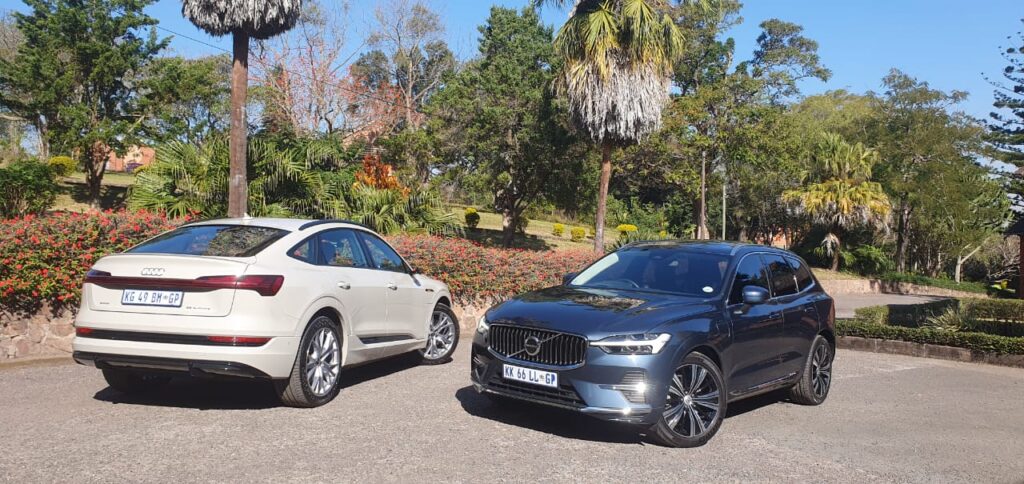
On the design side, both models have been around globally for a while (Volvo XC60 launched in 2018 and eTron Sportback in 2020) with recent minor design updates on the XC60. The eTron drew more attention from onlookers largely due to its Beige paint colour. The Sportback silhouette with 21 inch wheels was no match though for its digital mirrors which has most people trying to figure out how these worked.

The Volvo with its recent design updates looks classy but the dark navy paint colour doesn't do the design justice. If you look at the Polestar spec in a Thunder Grey, it would be a match for the eTron.

The Volvo has a conventional SUV roofline which doesn't make it stand out as much on road but it counters this with a much more roomy interior especially on luggage and rear headroom.
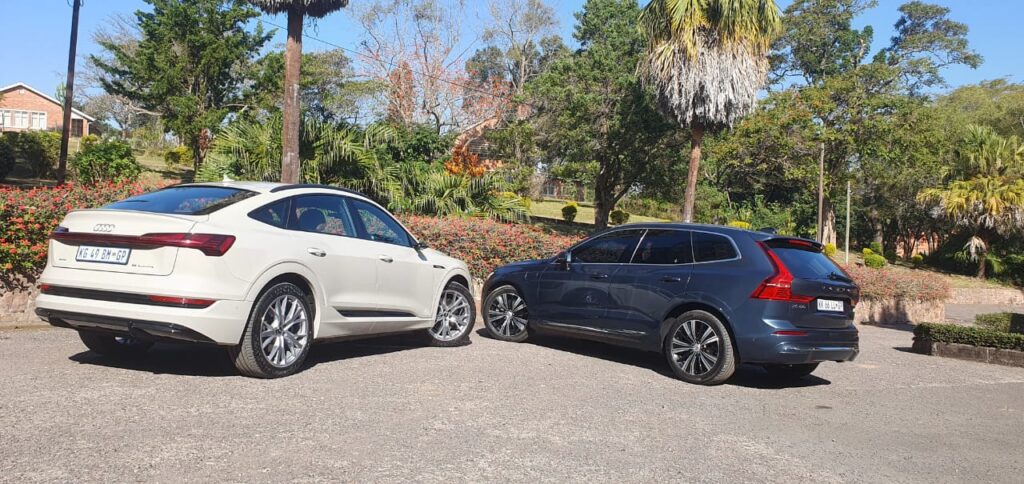
The Audi with its Coupe roofline looks stunning but suffers on the interior space and without a rear wiper, rear visibility was hampered when it rained and reversing. The digital side mirrors posed an even bigger problem when reversing at night in the rain as you can't judge the distance of obstacles you reversing around. The boot-lid rear view camera tended to help but reversing in a hurry just proved a huge challenge.

Both models came with large optional alloys (Audi 21 inch and Volvo 20 inch) and these added to the sporty look on both models, more so on the curvey Audi. Both models require charging for their batteries with the Audi weirdly getting two charging ports (left and right side of the car) and the Volvo having a normal single pot. The Volvo came with a charger that is only plugged on a wall socket and not the AC/DC charger used in public, meaning you can only charge at home with the one we had. The Audi can be charged at home, AC/DC and it comes with a home charging unit (AC) which is installed at your recommended location.
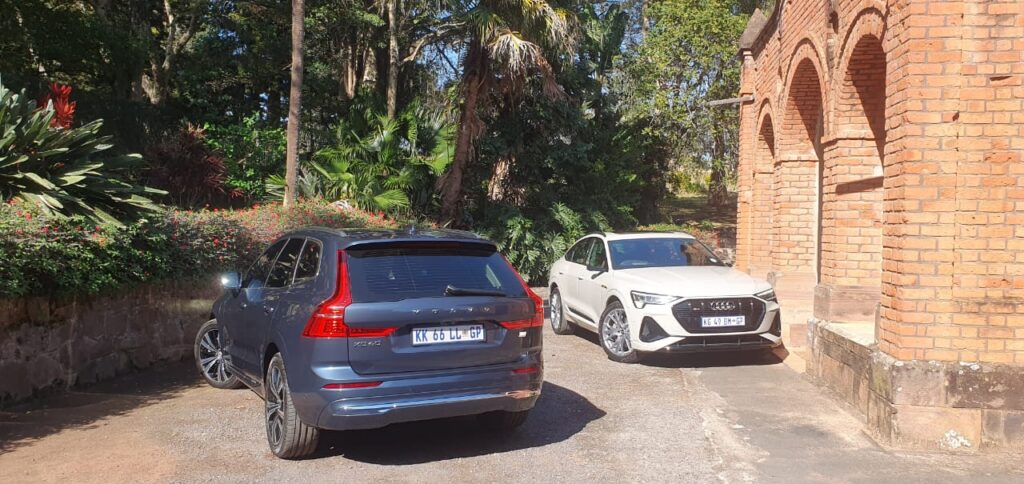
The Audi does take time to charge as during our test period, we needed to charge for nothing less than 2 hours (from around 30km to 320km full). The Volvo could charge overnight at home. The Audi gave a range of 320km fully charged but Audi claims 450km. The Volvo with its smaller battery only gave 40km of EV drive but then adds a 2.0 Turbo 4-cylinder resulting in 900km plus range and no range anxiety. The Volvo has a combined 340 kW (233kW ICE +107kW EV), 709 Nm (400Nm ICE + 309Nm EV) and sprints to 100km/h from standstill in 4.8 seconds. The Audi "only" has 300kW, 664Nm for a 0-100km/h sprint in 6.6 seconds. The Volvo felt and was quick with the EV motor giving that instant power and the engine coming in where it matters most, at the top end. Both models drive all wheels for added bad weather safety and off road ability (gravel at best with those wheels).

Inside the Audi hits back with a more modern interior layout with 3 screens (instrument cluster, infotainment and climate control). The interior quality is excellent as expected from Audi.

The beige seats looked stunning against the black dash finish. Both are electrically operated, heated (sucks power though) and cooled. The side mirror screens are neatly integrated into the doors and after a while, one finds it easy to use them. Lack of a control toggle for the infotainment screen means it's not as easy to operate on the move. The digital instrument cluster arrangement is one of the best you can find on the market.

Rear passenger space is adequate (legroom) but headroom falls behind the Volvo. The optional panoramic sun roof aids the feeling of spaciousness inside. Luggage space is severely below that of the much more spacious Volvo.

The Volvo also majors on quality however the layout is starting to feel its age. The Bowers & Wilkins audio system is one of the best sound systems we have experienced with class leading bass and clarity. The Audi with its mid range Bang & Olufsen sound just can't compete with the Volvos.

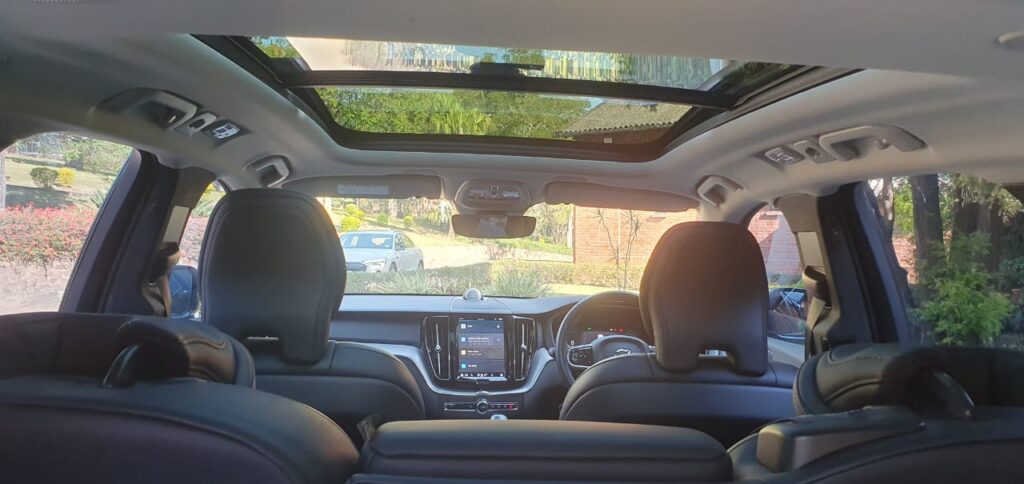
The Volvo has more rear space overall (head and leg room) and the optional panoramic sun roof also adds to the airy feeling inside.
On the road both cars feel surefooted and comfortable with the Audi better largely due its lack of engine noise. The Volvo is not too far behind though with good engine refinement. The Audi also rides better in bad roads.
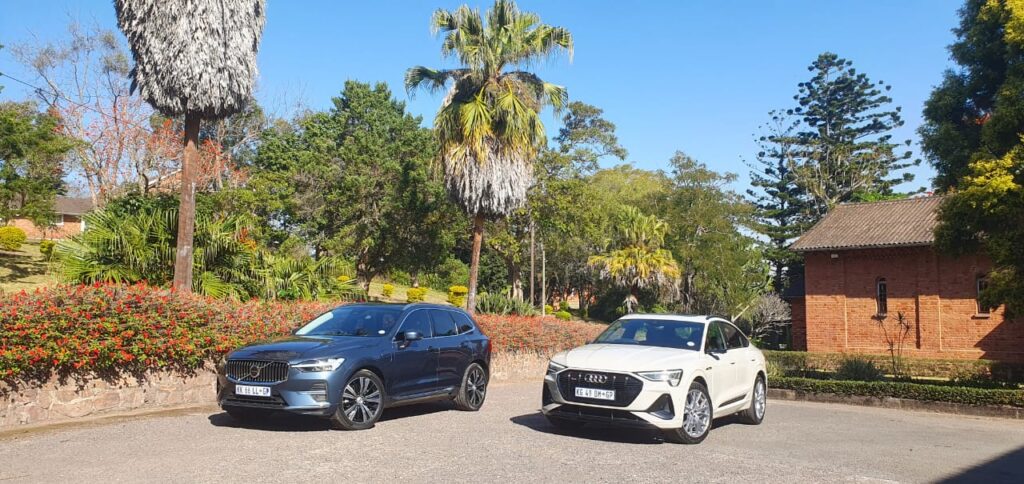
The test wasn't to directly compare these cars but mostly to see if these "future tech" drive cars are relevant to Mzansi. The Volvo certainly is with a best of both world even with the limited EV range. The Audi has been around for some time and at its launch, had very good EV tech. It's just other rival manufactures have caught and surpassed it with EV tech and Audi needs to up their game on range (Q8 eTron promises to sort that soon). Volvo also has full electric models (C40 in Mzansi) with the EX90 promising game changing technology. The Volvo starts at R1,282,400.00 without extras whilst the eTrion 55 Audi starts at R 2,115,000 which is steep irrespective of its EV tech (BMW does a much better job with its IX models at much lower prices). So in conclusion, its game on for future tech but local challenges do limit full EV adoption meaning Plug-In Hybrids like the Volvo are the safe and more value option for now. Maintenance though favours full EVs with less parts to service over the long run.