
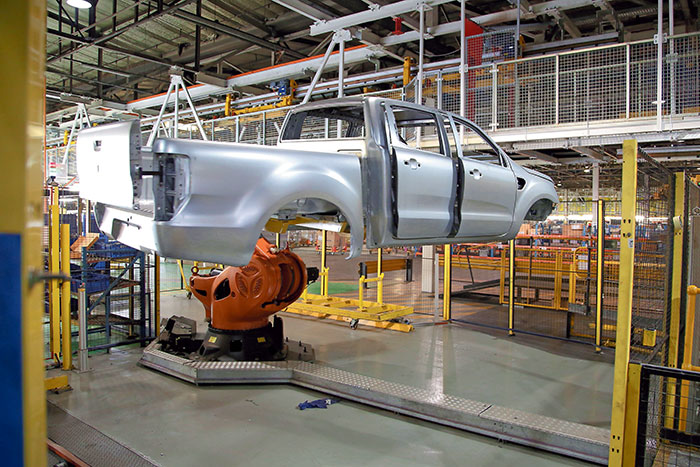
Ford South Africa has officially announced plans to initiate a retrenchment strategy that will result in approximately 473 South African job losses . This follows an official statement from the company and trade union Solidarity , which confirmed and specified that the Silverton plant in Pretoria and its Struandale engine plant in Gqeberha will be subject to the retrenchment program .
To specify, the retrenchments for these plants will include 391 operator positions from the Silverton plant, 73 from the Struandale plant, and 10 administrative positions. Why the implementation? Ford has called this a "realignment" of its production capacity to align with current and predicted future market demand.
The National Union of Mineworkers (NUM) has since called upon Ford to halt its planned retrenchments and engage in meaningful consultations to find alternatives . In a statement issued to the media on Monday, General Secretary Irvin Jim warned that the retrenchments will contribute to further deindustrialization and job losses in the sector.
"NUMSA has witnessed a painful pattern that as soon as employers' profits are under threat, the first thing they do is to target what they regard as the weakest link in the chain, which is workers," Jim said.
The union also emphasized the need for government intervention to support manufacturing and prevent large-scale job cuts.
"NUMSA is shocked at the announcement made by Ford Motor Company South Africa. We regard these plant closures and retrenchments as an attack on the South African working class."
The trade union Solidarity shares the same sentiments, as they too believe this will be the beginning of a great cause for concern for the automotive sector. The implementation of this retrenchment scheme would not only affect the retrenched workers but also negatively impact the local economy of Gqeberha and Pretoria, as this will increase the rate of unemployment.
Like NUMSA, the trade union Solidarity is also planning to seek alternatives to ensure that Ford finds other ways to implement their realignment strategy by scheduling consultation processes under the guidance and supervision of the Commission for Conciliation, Mediation, and Arbitration, and will support all affected union members.