

It's no longer unusual to see an OMODA or JAECOO on South African roads. In fact, Chinese brands have gone from being curious newcomers to serious contenders in just a few years. More interestingly, local buyers are beginning to embrace electrified vehicles too, making the arrival of the OMODA C7 SHS plug-in hybrid feel perfectly timed.
OMODA, who originally entered the market as a more luxurious and premium sub-brand to Chery has already experienced quite the stint in our market and globally. Since market introduction, OMODA & Jaecoo have managed to surpass 20,857 total vehicle sales and with the introduction of the C7, the brand has already secured 148 year-to-date sales units. Clearly there's something about these cars that's resonating with South Africans. So, after spending time with the C7 SHS, I wanted to find out exactly what that is.
If something looks good, it definitely gets attention right?
As far as looks good, the C7 looks very very appealing especially as our test unit has a Matte Grey finish. Most Chinese vehicle designs are striking and sport particularly strange proportions and the C7 embodies the same elements in a typical SUV form which is an already winning recipe in our market.
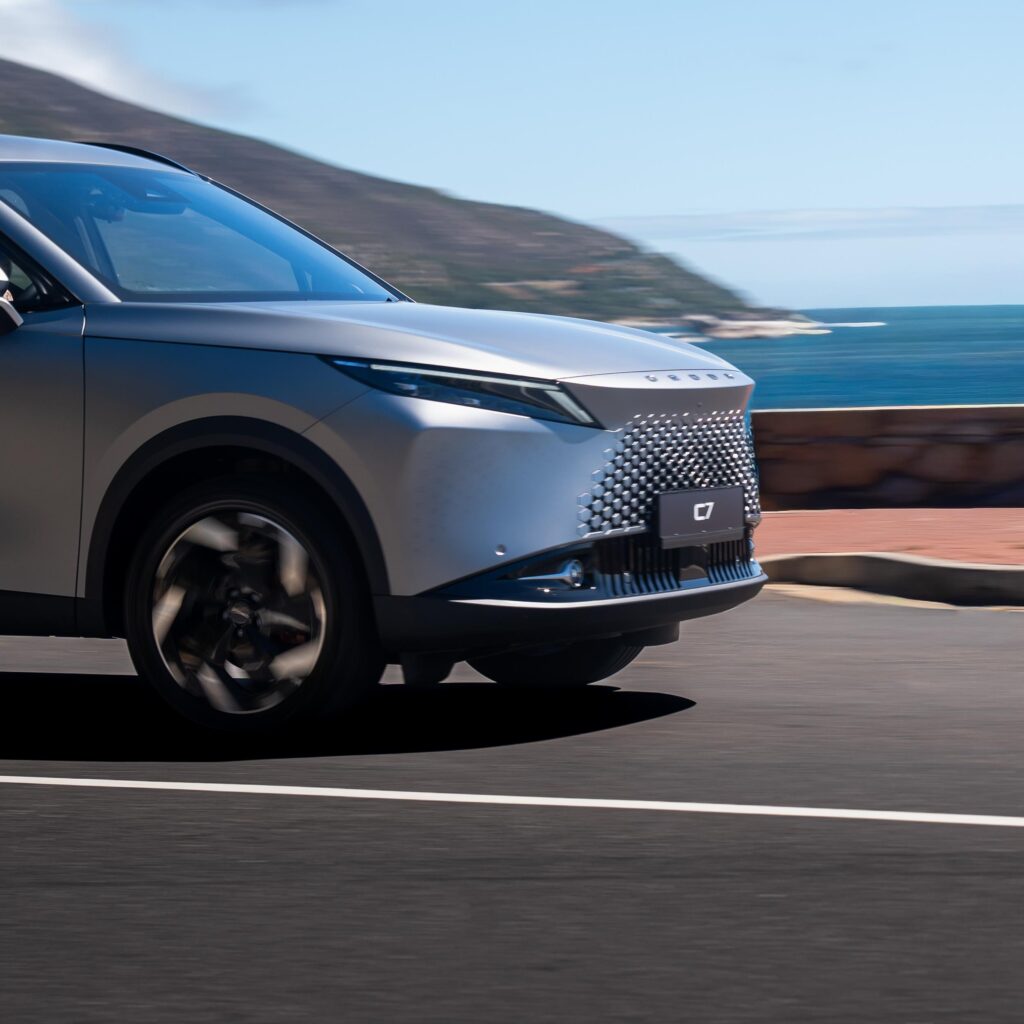
Starting up front, the vehicle sports a semi-closed-off X-shaped frameless grille, which has a honeycomb effect that blends into the body paint instead of having a grille fixture, making the car look "alive" if that makes sense. To light your way, OMODA has provided one with slim LED headlights and integrated daytime running lamps. One of my favorite lighting elements happens to be somehow integrated into the lower front bumper, where you'd normally have some venting, these hidden light signatures light up in a welcome-unlock sequence and add a kind of element that reminds me of the stars in the ceiling roof you get in a Rolls Royce.

Walk around to the side profile of the vehicle and here you quickly notice the long snout of the vehicle and just the sheer size, it almost looks like a seven seater vehicle. In scale, the vehicle measures at t measures 4,660 mm long, 1,875 mm wide, and 1,670 mm tall, with a 2,720 mm wheelbase. Making it slightly bigger than a key rival in the form of the Volkswagen Tiguan which measure around 4,600 to 4,615 mm in length, 1,855 to 1,865 mm in width, and 1,685 to 1,700 mm in height, with a 2,690 mm wheelbase.

Elements of the side profile consist of a fairly sporty aesthetic, as can be seen with the red-painted brake calipers that sit snug behind the multicolored, six-spoke 20-inch wheels. The rear quarter of the vehicle almost takes on a sloping coupe design, as opposed to any other typical boxy SUV shape, giving it an unmissable character that is somewhat in line with the OMODA brand, as we know it from the similarities of the C5 and C9. My favorite element that made me feel like a little kid was the battery level display integrated into the rear window section to indicate whether the battery is half empty or full, so cool.
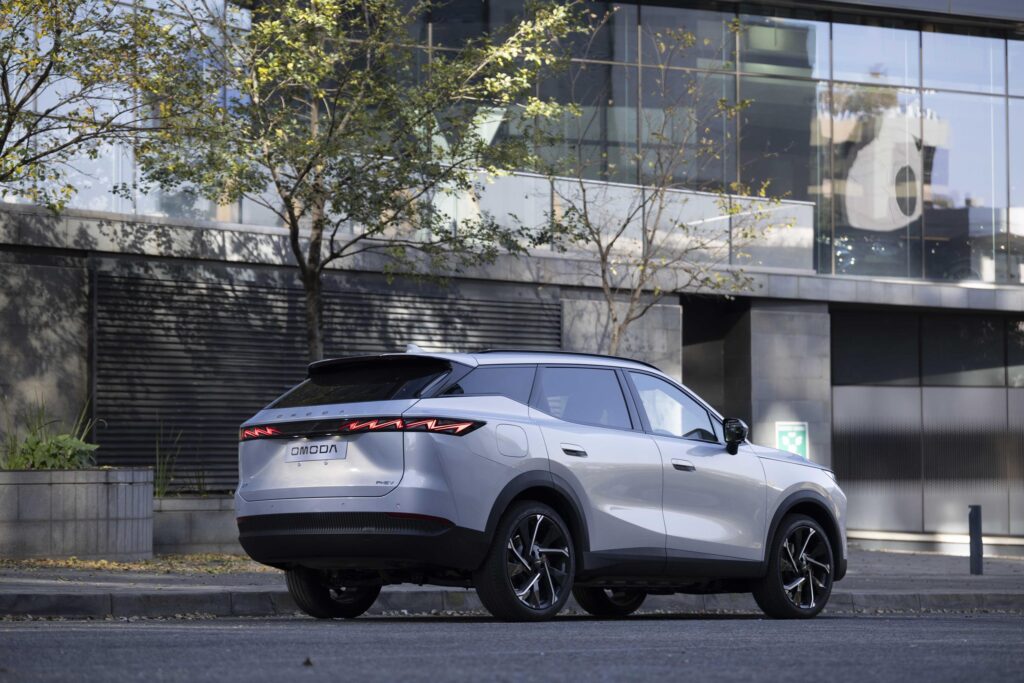
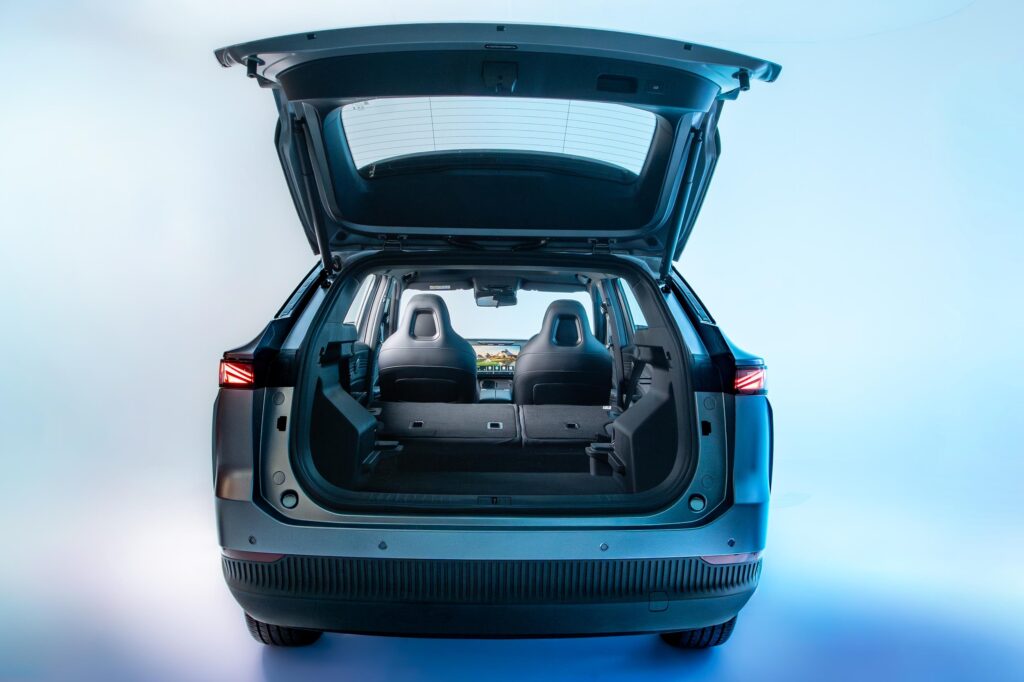
Lightning bolt-styled DRLs make a statement in the slim rear lights, not in a lightbar format, though. However, there is a black accent that spans the width of the electronically operated boot. All is mostly understated or minimalistic back here, but as a point of reference, you do have a "PHEV" badge to let you know that this is the hybrid version of the C7. The whole vehicle is tied down by an intelligent blend and use of both straight edges and curved ridges that accentuate the body, which tells the brain, "Hmm, that looks quite expensive." But then again, the Chinese rarely ever miss in the looks department.
So it looks quite good on the outside, does this migrate into the cabin?
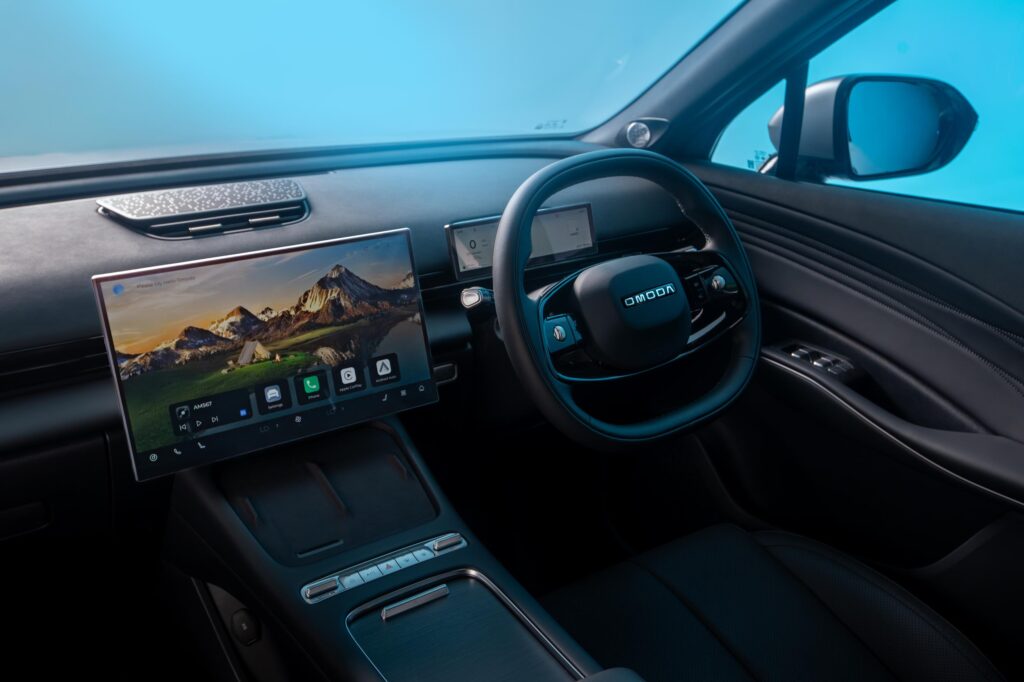
I was quite impressed but later very disappointed with the interior. Let us start by highlighting what you find in the cabin. A 15.6-inch infotainment display sits as the cabin's centerpiece, which allows for phone connectivity while also being able to display several key controls, like the charge rate and energy consumption, especially since this is the PHEV model. Most controls are also found within this display. However, there are some buttons, which is a big plus for me any day. These control your air conditioning, your drive mode selector, and the switch that switches the car between EV and HEV mode.
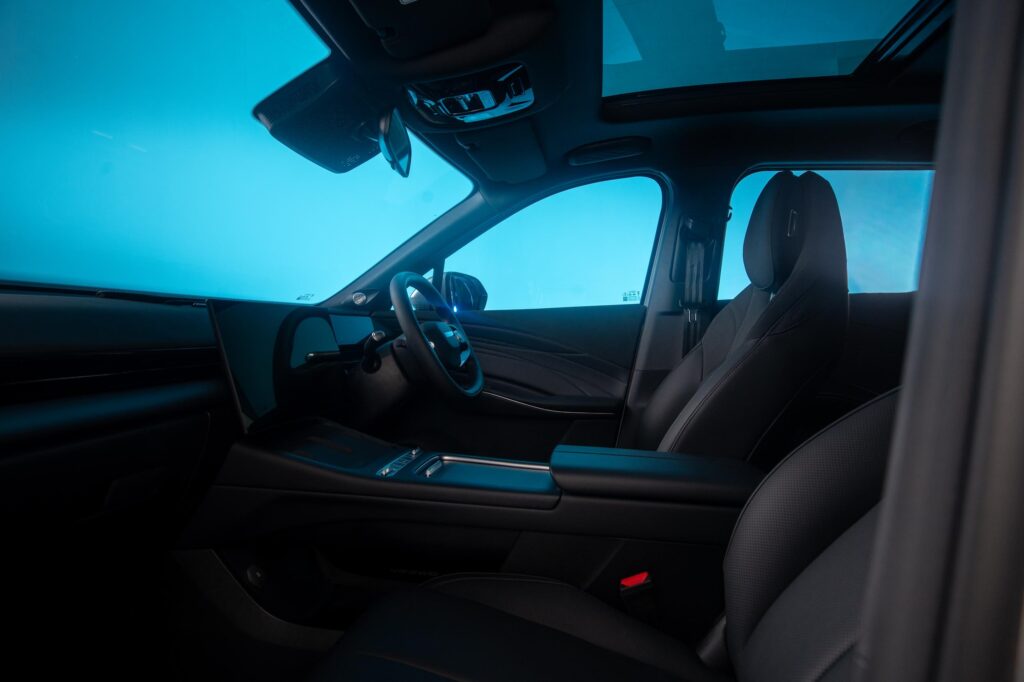
The cabin is put together in a continuous sense, the patterns that span the dashboard filter right into the door panels and flow into the rear as well. Materials here range from black leather to Nubuck-style synthetic leather, while the door cards benefit from a sort of Alcantara-like suede. This all looks very luxurious and feels plenty good to the fingertips. It creates an ambience you'd normally associate with cars costing considerably more.
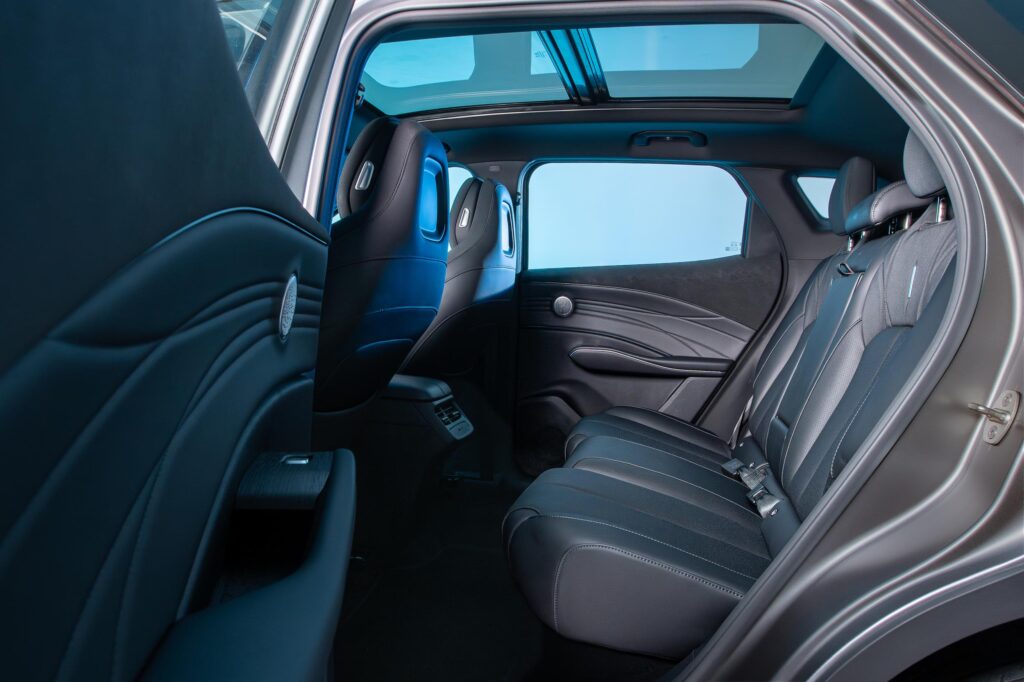
Some more standard equipment you get on the vehicle since it is the top of the range includes electrically adjustable front seats, which I somehow struggled to find a suitable position in, but alas, they came with heating, ventilation, and a driver's seat memory function. The cabin also has a dual-zone automatic climate control system and a very big panoramic sunroof. Storage space in the cabin was very plentiful, in fact, I am especially a fan of the space located just below the center console ( Smash and Grab who?) and the door bins, which are quite generous.
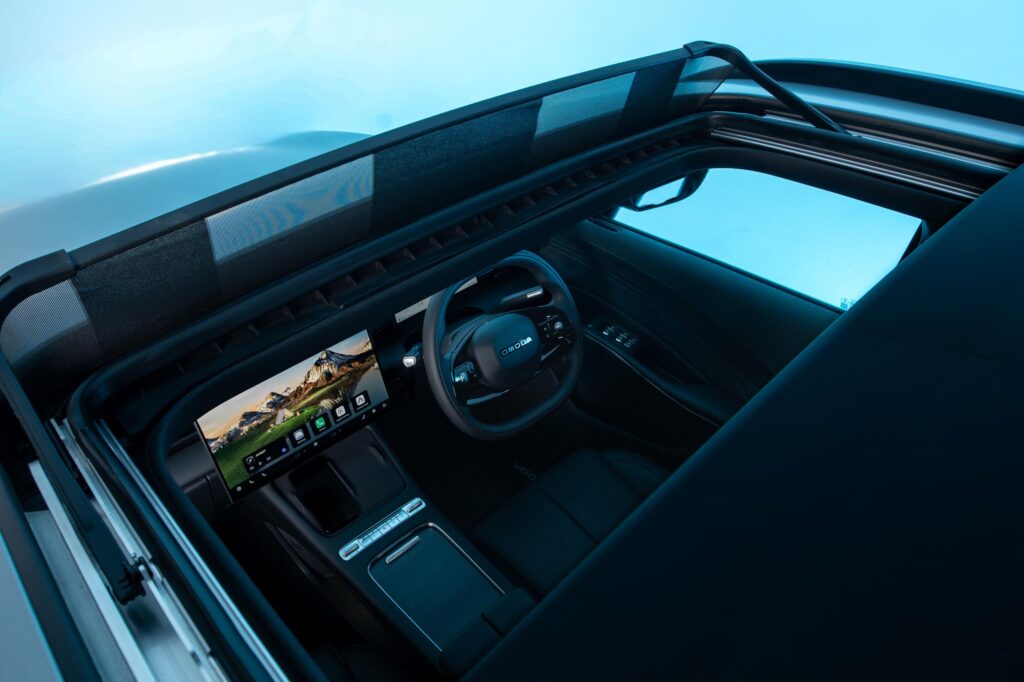
Now my sour take on this interior is that while it might be pleasing to the eye and some places are nice to touch, the level of quality is not up to standard in terms of fit and finish. I must implore that I am not entirely sure whether it was our particular test unit that had this problem, but it was certainly prominent, especially when in transit. Creaks, rattles, and sounds of internal plastics flexing or shifting were hard to ignore, and this made the drive quite unpleasant.
And that is such a bummer because this car rides so well even with the extra weight of the added battery system and even with the thin rubber the wheels are equipped with, the car drove well and was settled.
Speaking of the ride, what powers the car?
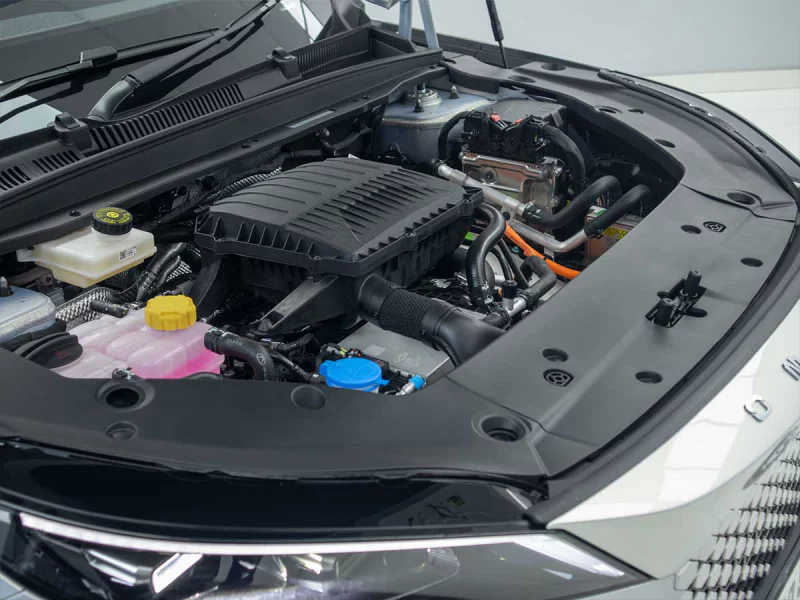
The car uses a 1.5-litre turbocharged petrol engine paired to a 18.4 kWh lithium-ion phosphate battery pack and together the car produces a total output of 255 kW and 525 Nm (With those numbers, you can smoke a hot hatch clean off the line..just saying). The electric components support both AC and DC fast charging, allowing you to charge from 30% to 80% in a claimed 20 minutes on a 40 kW DC charger.
When the car is filled to the brim and the battery is charged all the way up, OMODA promises over a 1000km of range and a fuel consumption of 5.0L /100 km. Oh and of course power is sent to just the front wheels via a Dedicated Hybrid Transmission (DHT).
The drive.
I have not seen the inside of a fueling station in a while, with 730 km of range still on cards for more trips to be had. I often spent most of my time with the car putting along in EV mode since the car offers an electric-only range of up to 105 km, where I just managed to tally up 6.4 L / 100 km over the complete stint with the vehicle. I see why people want to have a hybrid in their lives.
On the open road, the car is comfortable and compliant on the tricky road surfaces KZN has to offer.
The engine combination isn't as loud as some of its Chinese counterparts with this application, which was a splendid thing to learn. It does suffer from feeling a bit top-heavy when leaning into a bend, which might be a product of the extra weight gained from the electric components, but the transition between electric to ICE during regular driving was quite smooth and sometimes barely noticeable.
A pet peeve for me would have to be the handbrake and start button being either nonexistent or located in a fairly peculiar place. The gear of the C7 is located behind the steering wheel as a stalk that has an integrated park button, which also serves as a handbrake. This is a brilliant idea because there's less clutter on the center console, leaving space for a wireless charging pad, however, this is quite stressful to use daily.

My house has a manual gate, requiring me to exit my vehicle to operate it when coming or going. Exiting the car causes it to shift into park and engage the handbrake, preventing movement. And, without a start button, stepping out causes the car to lock and turn off since it relies on the key fob sensor to detect if the driver is nearby. One of those "Uggh" moments for sure.
Again, I feel that OMODA's approach is quite ahead of the game in terms of intergrating innovative tech in these cars that are aimed at convenience and a better user experience but they end just making fairly easy task become super complex and laboring. Don't stop making these features (If you are reading this) but somehow ease it in to the cars as opposed to going all out on something like automatic doors that sense a key fob instead of the good old door handle yank to access the interior of the vehicle, we like it but slow down.
Pricing
The OMODA C7 SHS is priced at R689,900, for context, that is way cheaper than its closest rivals both from China and from the legacy brands in the form of a Toyota RAV4 GX-R, Haval H6 GT PHEV, and Volkswagen Tiguan. Infact, here is a detailed breakdown of the C7 SHS against its rivals :
Performance & Fuel Economy Comparison
| Vehicle | Powertrain Type | Combined Power | Combined Torque | Claimed Fuel Economy | Pure EV Range |
|---|---|---|---|---|---|
| Omoda C7 SHS PHEV | Plug-in Hybrid (FWD) | 255 kW | 525 Nm | 4.9 L/100 km | 105 km |
| Haval H6 Hybrid (HEV) | Traditional Hybrid (FWD) | 179 kW | 530 Nm | 5.2 L/100 km | N/A (Gains charge via driving) |
| Toyota RAV4 GX-R | Naturally Aspirated Petrol (AWD) | 152 kW | 243 Nm | 7.5 L/100 km | N/A (Petrol only) |
| Volkswagen Tiguan 1.4 TSI | Turbo Petrol (FWD) | 110 kW | 250 Nm | 7.7 L/100 km | N/A (Petrol only) |
Service and warranty

The OMODA C7 is backed by a one-million km/10-year engine warranty for the first owner, along with a five-year/75,000 km service plan. The C7 1.6 TGDI is covered by a five-year/150,000 km factory warranty, while the C7 SHS benefits from a seven-year/200,000 km factory warranty. For the C7 SHS, the battery pack carries a 10-year/unlimited km warranty for the first owner, with certain electric drive unit components also covered under this plan. Buyers additionally receive five years of unlimited kilometre roadside assistance
Conclusion
After a week with the C7 SHS, it's easy to understand why OMODA has built such momentum in South Africa. The styling grabs attention, the technology feels very modern, and the plug-in hybrid system makes a compelling case for drivers who aren't quite ready to go fully electric like myself.
There are still areas to improve particularly around fit and finish but if this is the direction Chinese manufacturers are heading, established brands have every reason to pay attention or even feel like they are in the hot seat.