
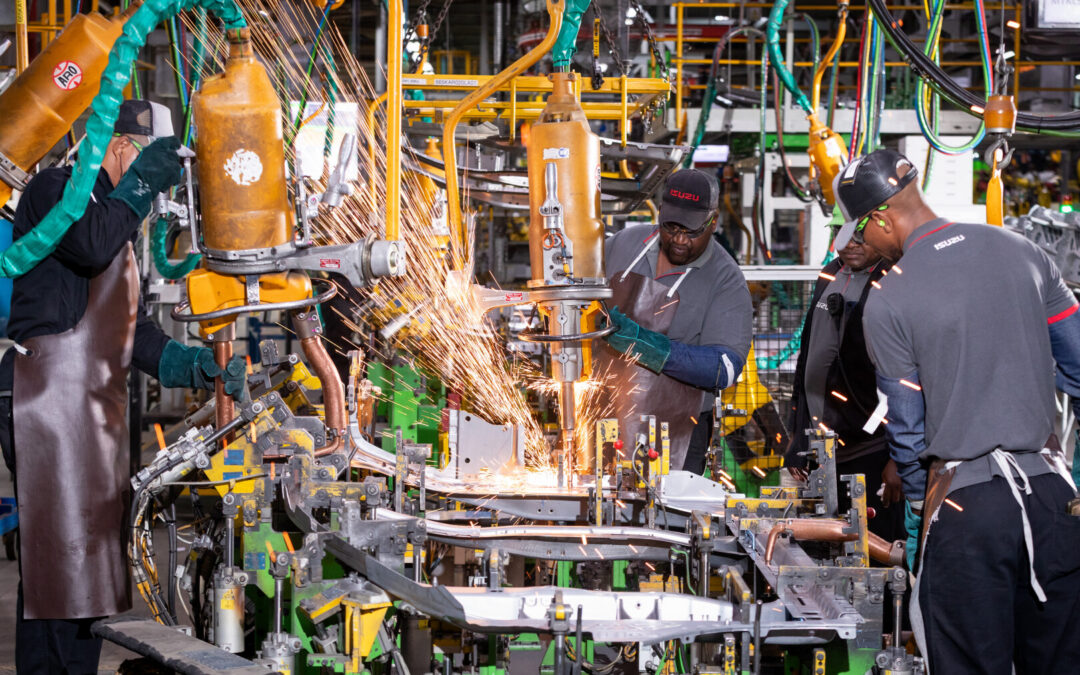
Isuzu has begun its efforts to reduce the amount of harmful gases released into the atmosphere by plant production processes after officially releasing a statement that they have reached a personal target. The brand also expanded to state that despite the now lower rate of carbon emissions released from production processes, the rate of production itself has continued to grow at a healthy pace .
What was the plan for Isuzu?

Isuzu Motors South Africa (IMSAf) has reduced its Scope 1 and Scope 2 CO₂ emissions by 38% against its 2013 baseline, while increasing vehicle production by 21% during the 2025/26 financial year at its Gqeberha manufacturing plant. Combined Scope 1 and Scope 2 emissions intensity also decreased from 0.89t CO₂e per vehicle produced in 2024 to 0.76t CO₂e in 2025, representing a 15% year-on-year improvement. These results, detailed in IMSAf’s 2026 Sustainability Report, demonstrate the company’s ability to reduce emissions intensity while expanding manufacturing output.
“As we expand our operations, we recognise that increased production must be supported by greater operational efficiency and a sustained focus on reducing our environmental impact,” said Celestin Ndhlovu, Executive Vice President: Corporate Services at IMSAf. “Our 38% reduction against the 2013 baseline represents significant progress towards our long-term ambitions. However, as production volumes increase, we must continue to strengthen our energy efficiency measures and accelerate the adoption of cleaner fuels and renewable energy to achieve our environmental targets.”
Isuzu says that this is the first step in total alignment of their commitment to the ISUZU Environmental Vision 2050. Which is the brands continued investment in energy efficiency, cleaner fuel technologies, process improvements and renewable energy.
How exactly does Isuzu plan to achieve these goals?
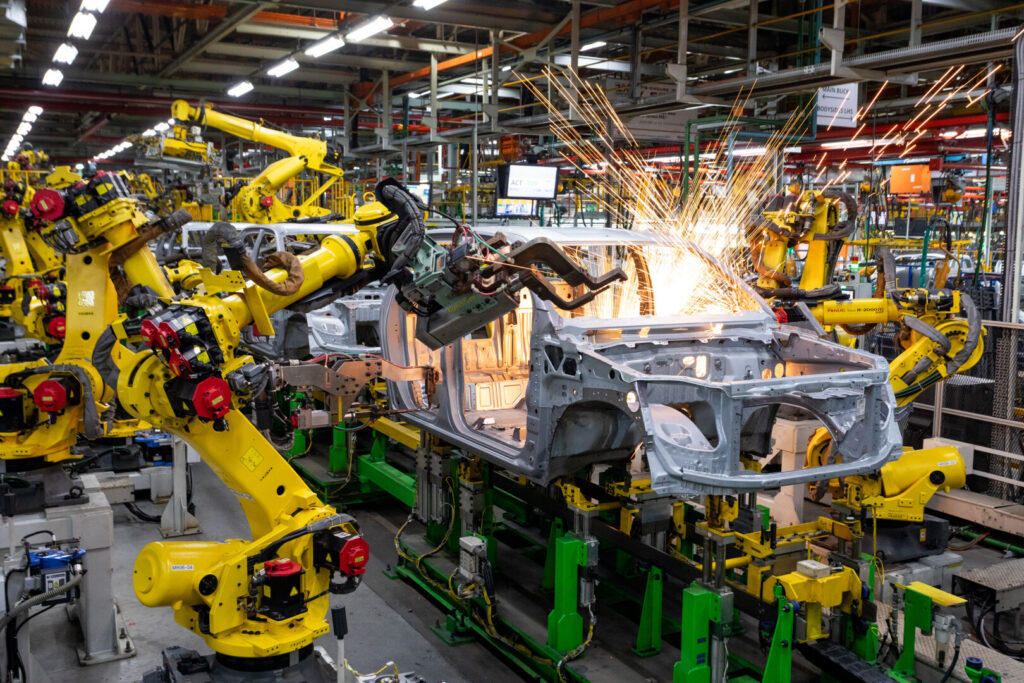
Isuzu has already changed the way they do things as well as they tools they use on the daily to carry out and finish work processes. The brand has introduced a range of operational improvements including transitioning from higher-emission liquid fuels to cleaner-burning Liquefied Petroleum Gas (LPG) in certain manufacturing operations, contributing to reductions in Scope 1 emissions.
Furthermore, Isuzu has also contributed towards lowering energy consumption rate measures that contributed to a reported 7% improvement in Scope 2 emissions performance. These include process and chemical optimisation, equipment upgrades, enhanced energy monitoring and asset-sustainment initiatives designed to improve equipment reliability, optimise energy consumption and strengthen operational efficiency.
Since a big chunk of production relies on electricity supply rated around 69%, the switch from more sustainable and cleaner enegery sources becomes the focal point which will drive the brands decarbonisation strategy. To support this transition, IMSAf has secured an agreement with an Independent Power Producer (IPP) for wind and solar energy, aimed at reducing its dependence on South Africa’s carbon-intensive electricity grid.
Building on these initiatives, IMSAf is evaluating further renewable energy investments to support progress towards its 2030 target of a 50% reduction in Scope 1 and Scope 2 emissions. These include rooftop and ground-mounted solar photovoltaic systems supported by battery storage, alongside opportunities to increase the procurement of electricity from renewable sources.
The 2026 Sustainability Report provides further detail on IMSAf’s environmental performance and progress towards its sustainability commitments. IMSAf’s carbon footprint is independently assessed by a professional body, providing external verification of the company’s emissions measurement and reporting approach.