

VW has unveiled the new Tiguan, its most popular SUV model globally and it promises to elevate its status with Hybrid tech, more user friendly interior layout and better info technology.
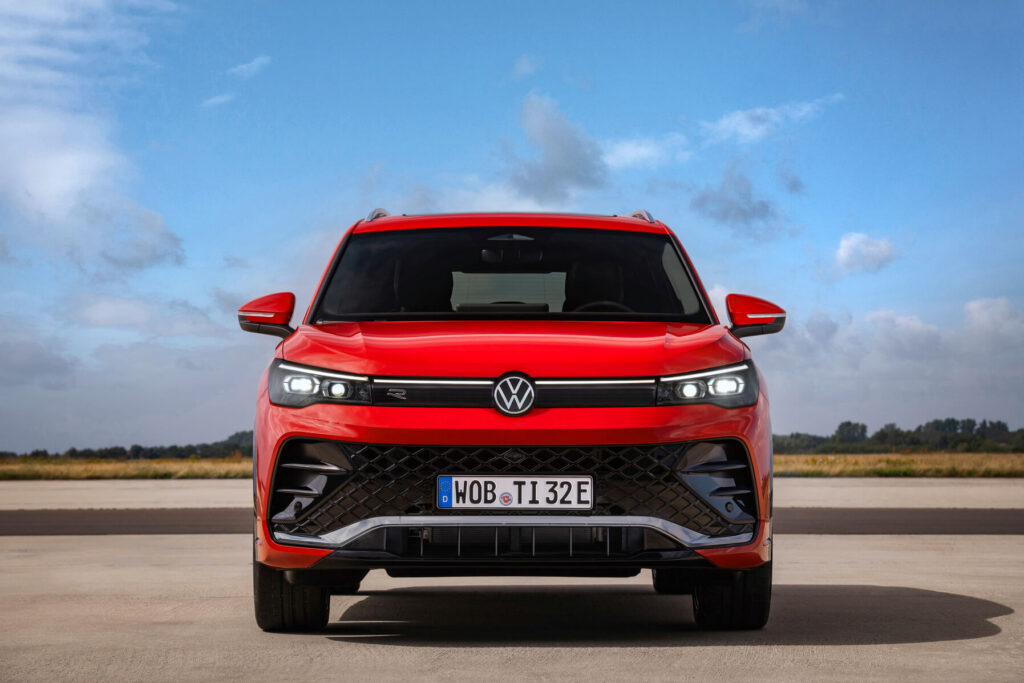
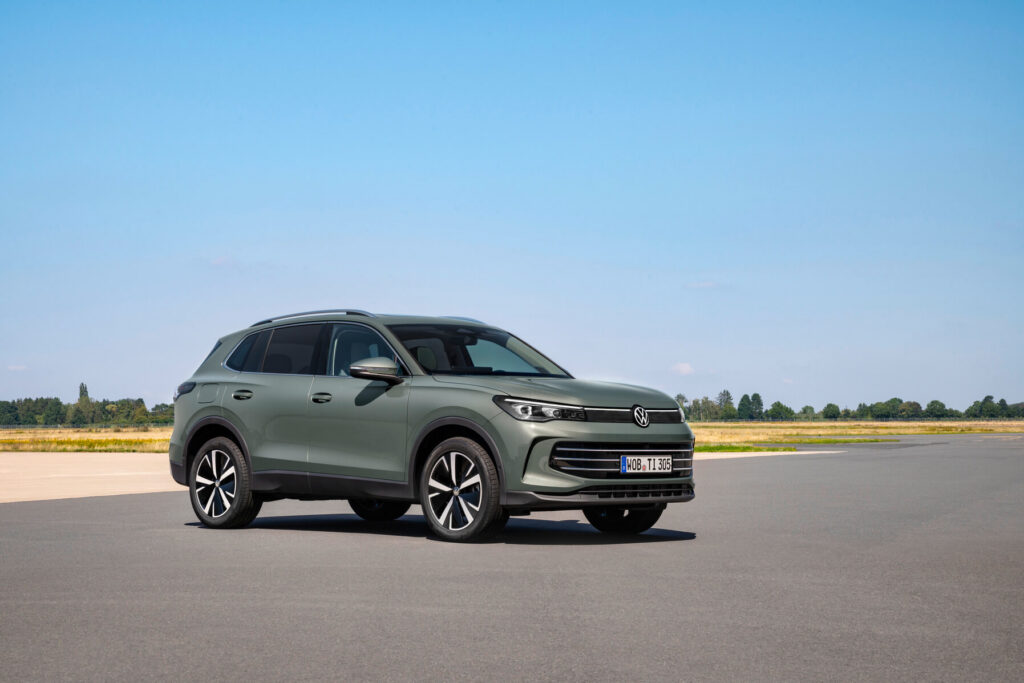
The compact SUV comes with a completely new design. As a particularly striking feature, the front of the vehicle has a powerful look with very flat LED headlights and glass-covered horizontal strip. The radiator grille openings are now located at the outer sides of the bumper, where air curtains ensure optimum air routing. The cleanly designed front end highlights the fact that the drag coefficient has improved from 0.33 to 0.28. The Tiguan is the first MQB model to be launched with the newly developed IQ.LIGHT HD matrix headlights2. The interactive lighting system was also developed in parallel for the premium-class Touareg – both SUVs therefore share the same basic design of the headlights. HD stands for High Definition, meaning a high resolution of the light sources.

This silhouette is characterised by athletic shoulders over the wheel housings (with up to 20-inch wheels). A new horizontal LED strip adds emphasis to the unmistakeable Tiguan rear end.

The interior of the Tiguan features a completely new concept and design. It stands out with its high standards of material and workmanship. In addition, the new cockpit landscape is intuitive to use, closely integrated, and has a clean and smart design.

The modules include the new Digital Cockpit (digital instruments with anti-reflective coating in tablet landscape format), an infotainment screen that measures up to 38 centimetres (15 inches) and has an entirely new menu structure and graphics, a new head-up display (projections on to the windscreen) and a new multifunction driving experience switch with integrated OLED display.

This new rotary control with its own mini screen can be used to control the driving profile, radio volume or also the background lighting colours. In contrast, numerous vehicle and infotainment functions can be easily adjusted using natural language with the new IDA voice assistant. Volkswagen has revamped the adaptive chassis control DCC: with the optional DCC Pro with two-valve shock absorbers. The new model is additionally equipped as standard with a Vehicle Dynamics Manager – an MQB system that made its debut in the current Golf GTI. The system controls the functions of the electronic differential locks (XDS) and the lateral dynamics components of the controlled shock absorbers in the DCC Pro system.
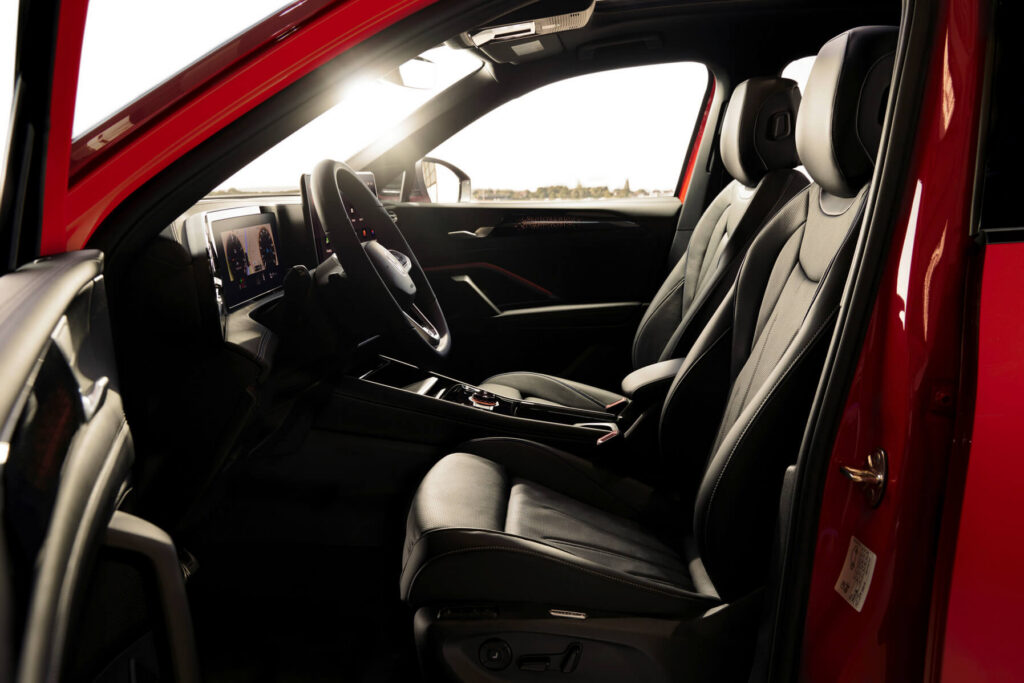
The new ergoActive Plus seats with pneumatic four-way lumbar adjustment and pneumatic 10-chamber pressure massage function are a perfect match for the high-quality character of the Tiguan.

In addition, there is a programming function for automatic activation of the seat heating or seat ventilation at certain outside temperatures.
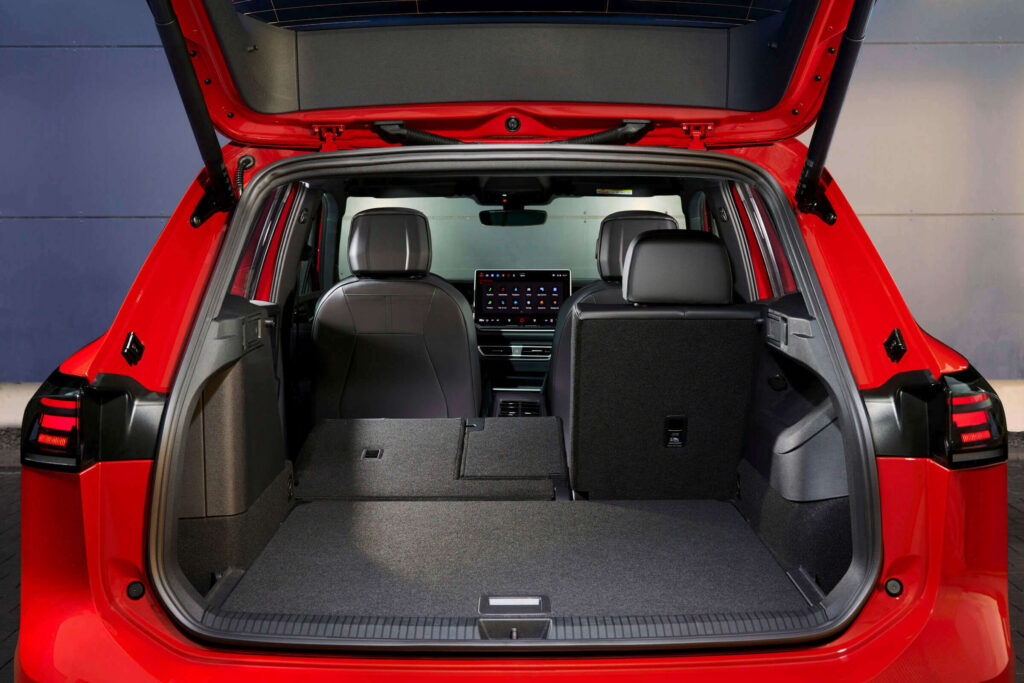
The new Tiguan has increased in length by approximately three centimetres. The height, width and wheelbase remain practically identical to the predecessor. The luggage compartment capacity of the new generation shows just how good the use of space is: although the SUV is only slightly longer, its luggage compartment capacity has increased by 37 litres to 652 litres (when loaded up to the height of the rear seat backrests).
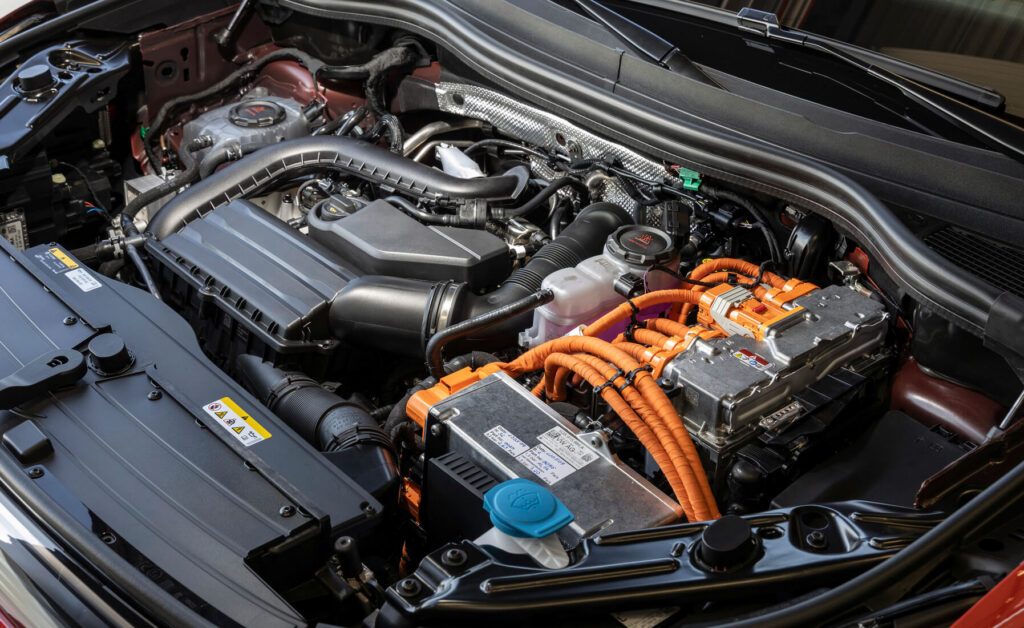
Thanks to MQB evo, various drive types can be implemented in the Tiguan. For example, there will be turbo diesel engines (TDI), a 2.0-liter tune making 110 kW or 142 kW.
Petrol turbo engines (TSI) comprise of a 2.0-liter four-cylinder, making either 150 kW or 195 kW. With the advent of electrification, there is also a mild hybrid turbo gasoline engines (eTSI) where there is a turbocharged 1.5-liter four-cylinder linked to a 48-volt lithium-ion battery and 48-volt starter/generator. Cylinder deactivation can let the engine run on two pistons. Finally there is also a plug-in hybrid systems (eHybrid), which will be offered exclusively in conjunction with the automatic transmission (DSG) in the future. with total outputs of 201 horsepower (150 kilowatts) or 268 hp (200 kW). These models also use a 19.7-kilowatt-hour battery that can provide an electric-only range as high as 100km. The AC charger now supports a more powerful 11 kW charger and the car can accept up to 50 kW when connected to a DC fast charger.
No word yet from Mzansi VW when the Tiguan will be launched locally but 2024 First Quarter is the likely time.