

VW and Ford entered into a partnership on commercial products with the Amarok being the first product Mzansi experienced that shares the Ford genes. Judging by how many one sees on the road, I'd say it's an arrangement that works. Now we have the VW bus, a model that is rich in history with Mzansi buyers....volksie bus. We tested the new "Ford partnership" Transporter to see if its lost its DNA.
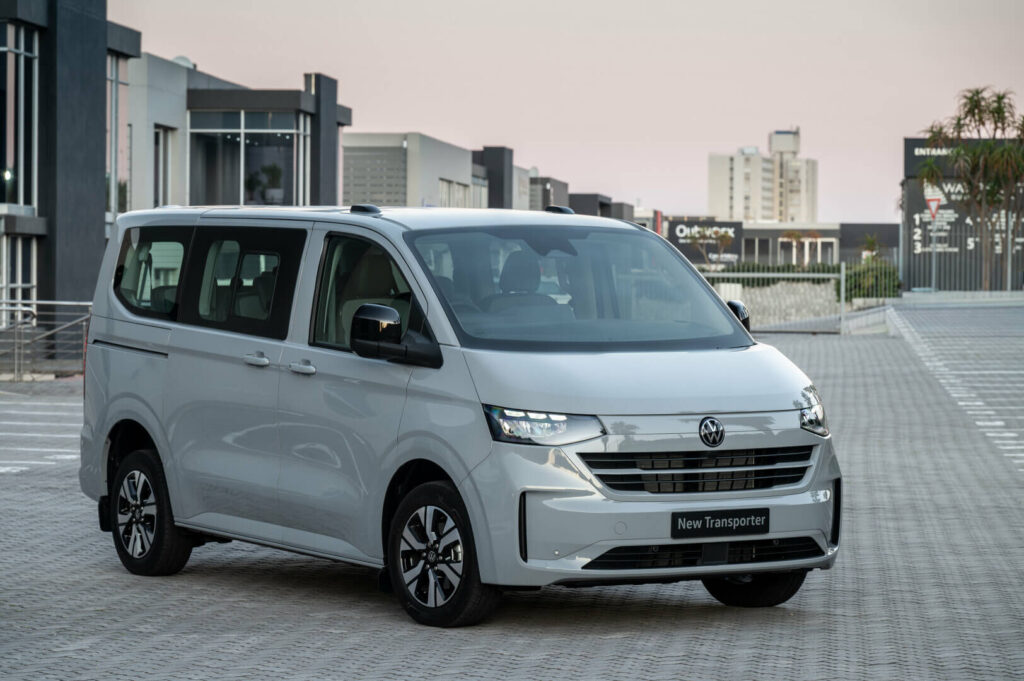
From the front one would have expected close design similarities to the Ford but VW designers have given the Transporter its own personality. We had many people approach us asking if this is the new VW "Cara cara", something that hints at the design grabbing attention. The front LED daytime lights, the lower side air intakes give the front a classy look. When one sees the Ford donor car though, you start to see some resemblance. On that point, when a current Kombi owner saw the new bus, he felt it had lost the 'German'ness" and looked toned down. You be the judge (see last spec Kombi below).......
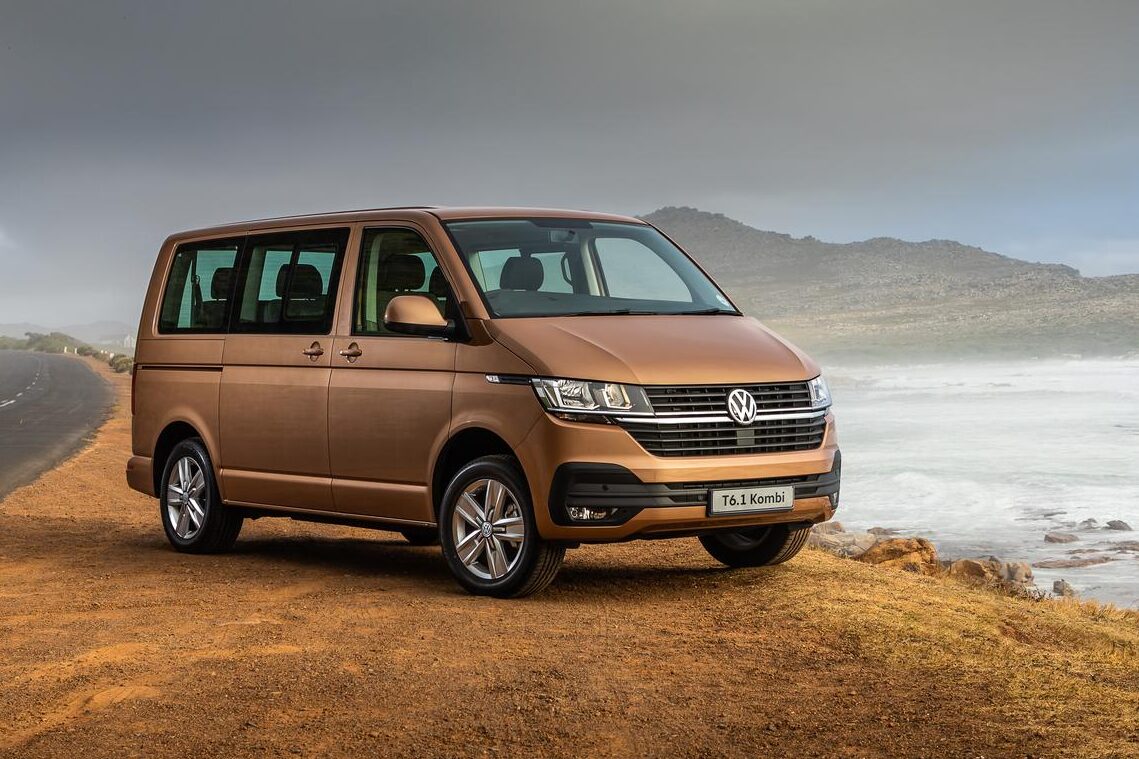
The bigger new model has made the 17 inch alloy wheels look tiny on the Transporter. When compared to the previous model (above) which also had 17 inch wheels, the proportions worked better. Interestingly, the previous model had bigger and lower glass area (especially for rear passengers) when compared to the new model. Opening the rear sliding doors (manual similar to the previous model) was easy, enabling better access to the interior. However closing the door from outside required one to really pull hard on the exterior lever. Initially I thought you just had to use the lever inside (easy to reach with the door open but impractical). Later on, one realised that you need to pull the external lever much harder to enable it to release the door to close. Access to the front was much better than the previous model as this new model has a wider opening angle. One does need to be careful when opening the front doors in windy conditions as they can get flung wildly to the car or object one would have parked next to.
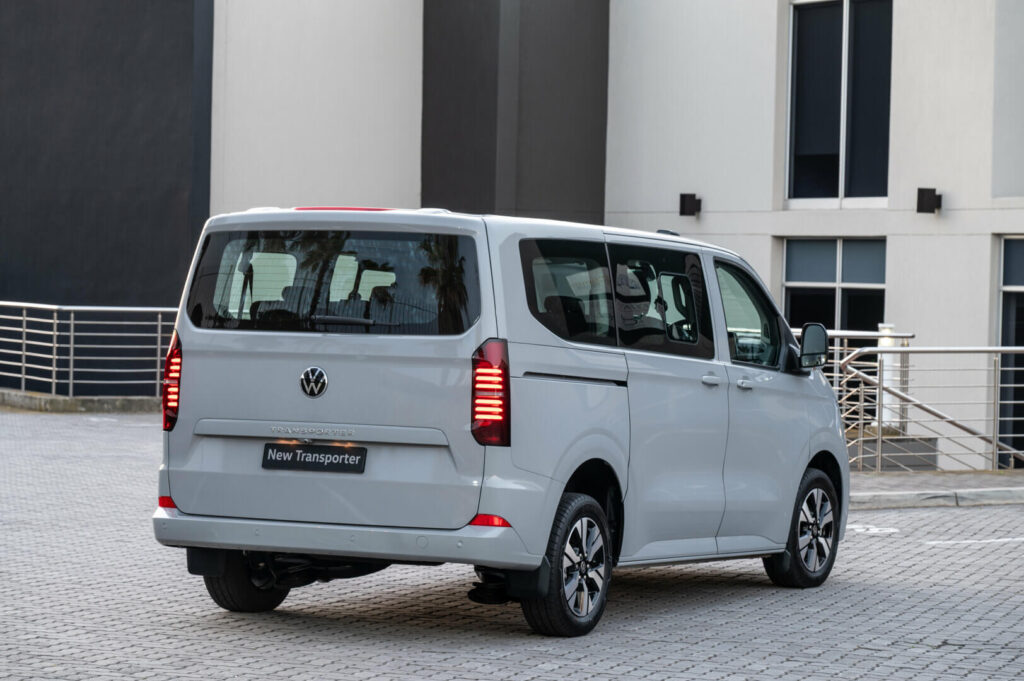
The rear (boot) gets a larger door (also manually operated) which is great news for loading large items but one needs to be careful of the bumper when loading some items as it's easy to scratch. The leather latch on the inside makes it easy to close the large door as one usually avoids touching the bodywork when the Transporter is dirty (something frequent at the back from dust). The new Transporter is noticeably larger than the previous model and that will make parking intimidating but the front and rear parking system makes it easy (one of our testers did manage to scratch the rear light in a confined parking space whilst rushing to park at the airport which proves the need to be extra careful).

Now let's get to the interior as this is the most important part of any people mover. With the bigger dimensions come a pleasant increase in usable space inside. The dash suffers from the Ford bits with perceived quality lower versus the previous model. Stowage space is plenty up front aiding carrying bottles and documents with ease. The large infotainment touchscreen and instrument cluster are clear to view and operate (via the steering wheel buttons) but having the air con controls on the touchscreen is not very user friendly or safe.

The front seats come in some kind of leather that feel durable but not so "luxury" but then again for a people mover, you prefer durability over sumptuousness. Arm rests on both sides of the front seats is great (like the previous models) making relaxed trips easily achieved. Adjustments for the driver seat allows one to easily find a comfortable driving position. The removal of the gear lever from the lower front left to a steering column aids practicality but makes changing gears quickly finicky and tricky with one needing harder inputs to move from Reverse to Drive. One found revving the engine (when in Neutral) expecting drive after flicking the gear-lever to change from R to D.

The rear has two rows of individual seats for 6 people, something which is welcome when compared to the bench set up of old. The seats can individualyl fold which aids entry and also practicality. Things fall apart when one seeks oddment space at the back with the middle row being particularly deprived of space to put stuff (cup holders and other stowage space). To the new models credit though, this was much worse on the older model I might add so maybe VW could have done some improvements here. Air con controls are neatly placed on the ceiling aiding easy control even when in motion. Removing the rear seats is so easy you wonder why other rivals cant just copy this system. At a church function, one easily removed the last row and this gave the Transporter space to carry large luggage.
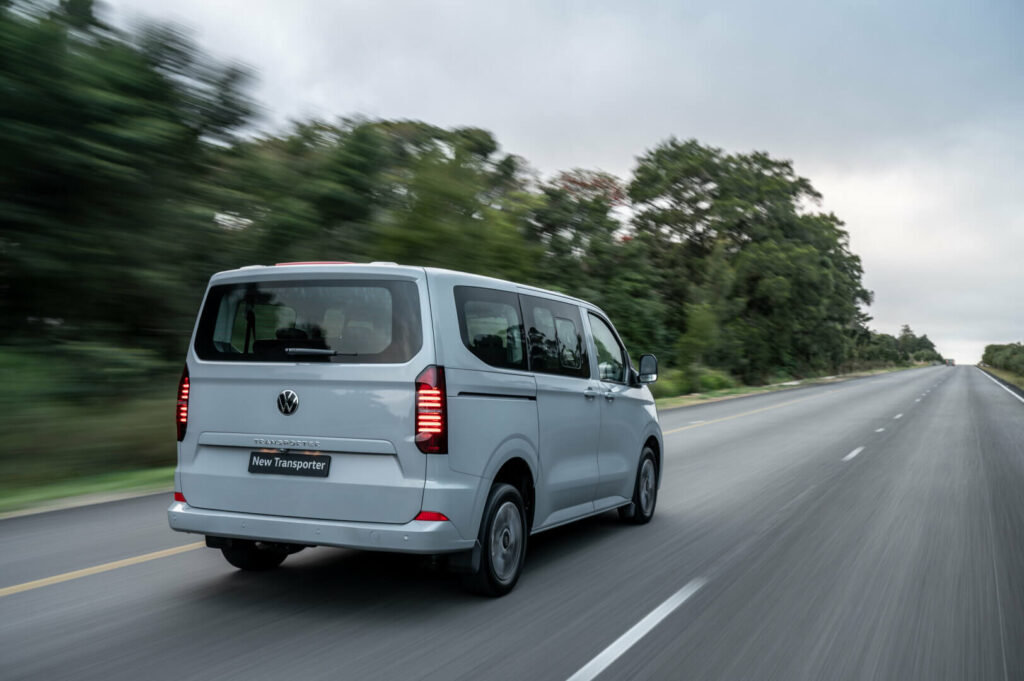
On the move, there was a very irritating thud when going over speed humps which felt like something was breaking and it was quite noticeable when unladen. Comfort on the move was good with low wind noise whilst suspension comfort when laden was good. The engine felt underpowered and the gearbox felt cumbersome when in stop and go traffic or even moving in tight spaces. This makes one need to control power inputs carefully to avoid giving it too much and then it jumps. Driving the front wheels is a 125kW 2.0 Turbodiesel engine from the Ford parts bin. When on the move, it does feel good to drive up inclines but you do feel it needs more oomph when one carries more people and will likely struggle with a full load and towing.
Priced at R 1,116,845 for the Kombi 2.0 TDI 125kW 4x2 Life Auto SWB (8-seater), the model is rather pricy when one take into account the more luxurious Hyundai Staria Luxury (R1,299.900.00) offers more power, a lot more spec and comfort, carries 9 occupants. The lesser priced Elite Staria (R1 079 900) still offers a better package than the VW. The VW offers 3-year/120,000km manufacturer warranty which is less than Hyundai but then gives a more all round 5-year/60,000km EasyDrive maintenance plan. The Mercedes offering - Vito starts at a crazy to believe R1.4m whilst offering less.