

Let us highlight one of the most important vehicles in our country that is pivotal in ensuring thousands and thousands of commuters make it to work, home and anywhere people go to on time, safe and economically. Not to be confused with the Quantum, the HiAce is the lower, "entry spec" to the Toyota people mover. In Mzansi, both the Hi-Ace (in Sesfikile and GL spec) and the Quantum, which is the more higher and more newer model (below) are sold new.
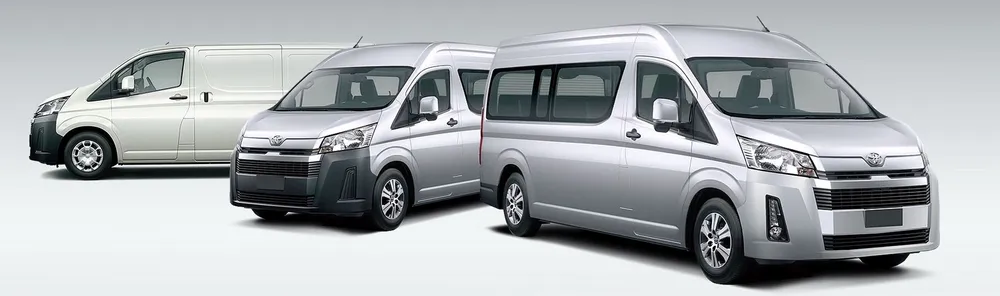
The Hi-Ace (below) is most popular with commuters as a daily mode of transport.

The Toyota Hiace is still available in many markets, with Japan also using the model. In an article written on Drive.com.au the HiAce has been updated internally and externally.
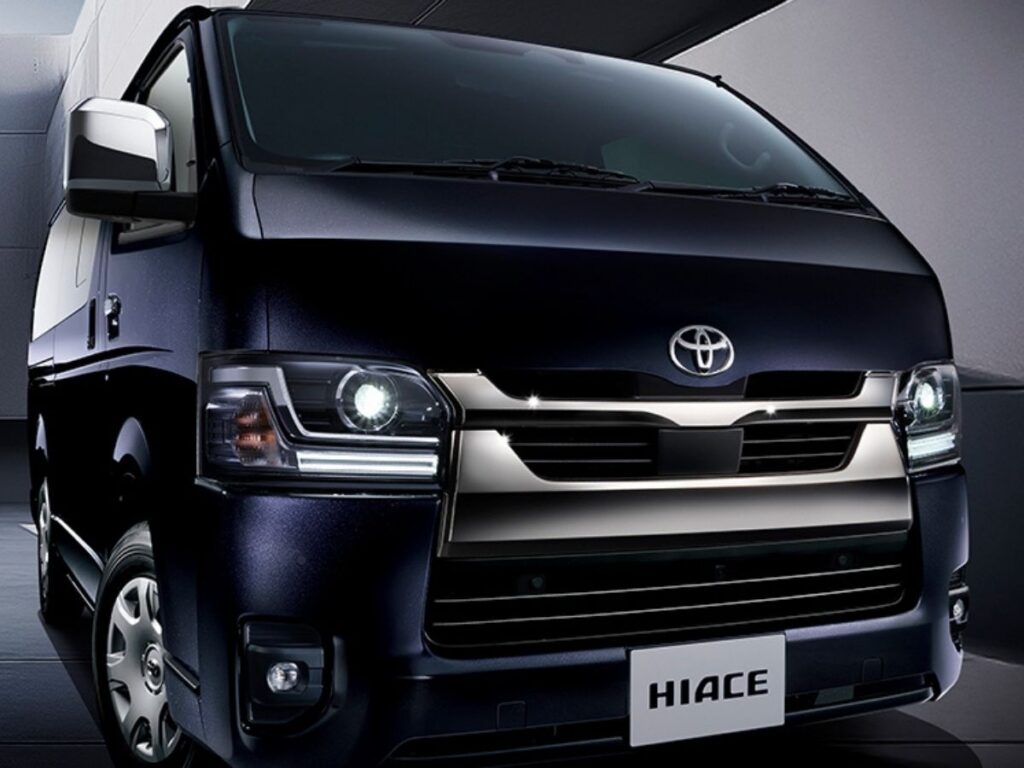
The facelift Hi-Ace has received new bi-LED headlights in the same housings as the old halogen units with LED daytime-running lights. There is a revised front grille with fog lamps housings also revised on the higher spec models. These changes will be done across the range in its variants(delivery van, people-carrier, and Commuter bus body styles).
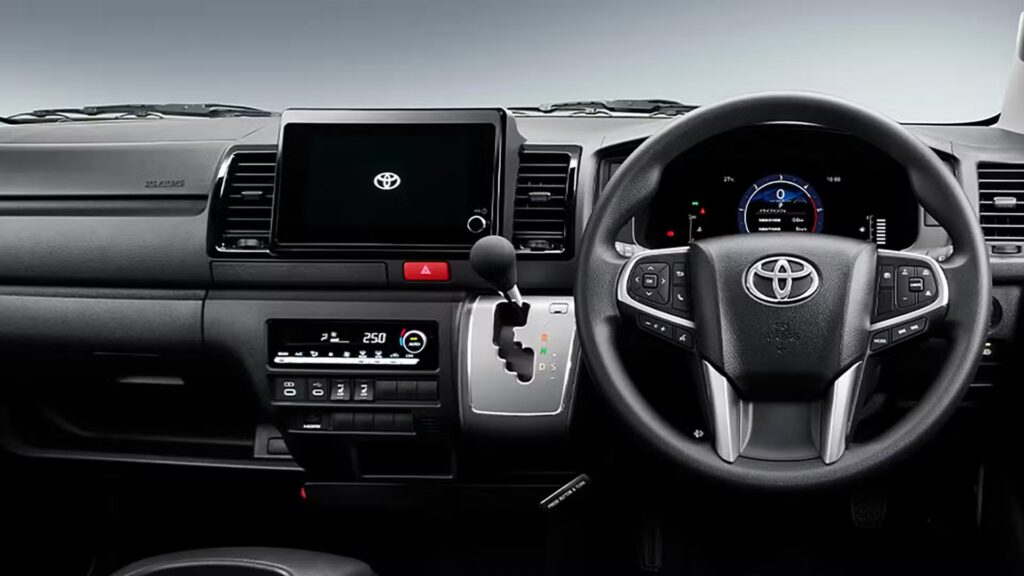
On the interior there is a new 8.0-inch infotainment touchscreen with Apple CarPlay and satellite navigation built in whilst the driver gains a 7.0-inch digital instrument display that replaces the analogue dials.
A more modern climate-control panel from newer Toyotas has been added, alongside two USB-C ports, a new steering wheel, heated front seats, and a 360-degree camera.
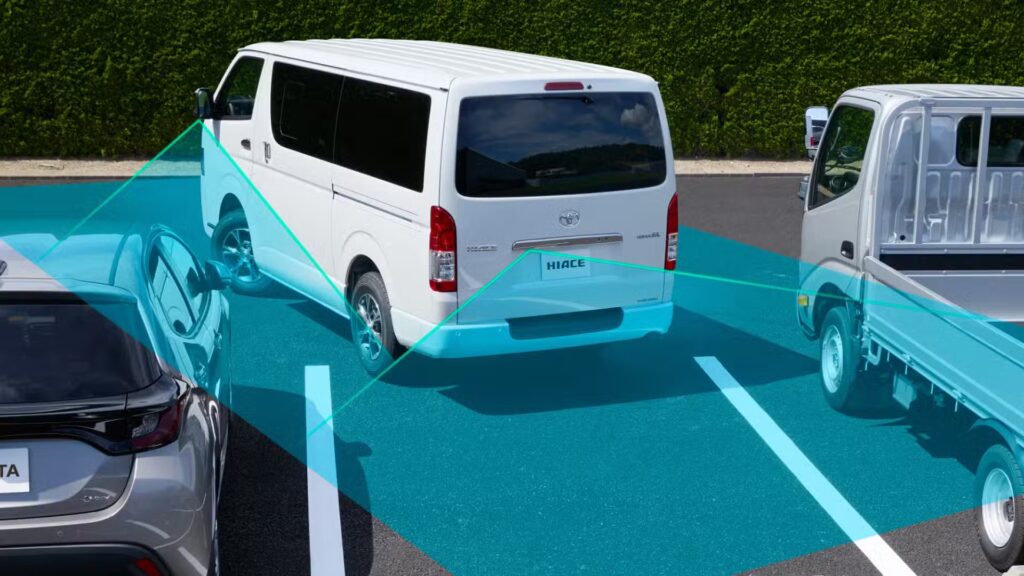
Advanced safety technology has been introduced to the ageing van, led by autonomous emergency braking (AEB) with pedestrian, cyclist, motorcyclist, and intersection head-on crash detection.
It also gains speed sign recognition and adaptive cruise control. Lane departure alert, automatic high-beams, and parking sensors are understood to have already been on the equipment list.

Engine options in Japan consists of a choice of a 2.0-litre non-turbo petrol, 2.7-litre non-turbo petrol, and 2.8-litre turbo-diesel four-cylinder engines GD-6, all matched with a six-speed automatic transmission. The petrol engines produce 100kW/182Nm and 118kW/243Nm respectively, while the diesel develops 111kW/300Nm in the Japanese van. In South Africa, it's unlikely that the 2.0 and 2.8 engines will be adopted as the 2.7 petrol and 2.5 D4-D engine have proven adequate to the job at hand at a lower cost. These engines are quoted at 111kW/241Nm for the 2.7 petrol whilst the popular option 2.5 D4-D is quoted at 75kW/260Nm. Toyota SA might consider upping those figures on the D4-D a bit as that engine in old spec Fortuner (2013 models) produced 106/343Nm.
In Japan, rear-wheel drive is standard across the range, with all-wheel drive optional on the 2.7-litre petrol and 2.8-litre diesel. The 2.8-litre turbo-diesel is heavily detuned from its use in the Australian-market HiAce, where it produces 130kW/450Nm with a six-speed automatic, let alone the Hilux ute's 150kW/500Nm.

The flat-nose HiAce is one of the oldest models sold new by Toyota globally, though it is no match for the now-42-year-old LandCruiser 70 Series four-wheel-drive.
It is evident that you just can not kill off a good offering because as you can see in most markets the Hiace continues to be a strong seller in markets needing robust, versatile transport solutions, even as different generations cater to different price points and specific demands.