

Toyota South Africa Motors (TSAM) recently hosted a special visit from Hiroki Nakajima, Executive Vice President for Toyota Motor Corporation (TMC), where a new Global and Regional Policy was announced. TSAM was the first affiliate outside of Japan to receive this regional visit. The policy, introduced by Nakajima, focuses on three key pillars: Electrification, Diversification, and Intelligence. It aims to achieve carbon neutrality globally by 2050 and includes milestones such as a 33% reduction of CO2 emissions by 2030. Toyota plans to expand its battery electric vehicle (BEV) lineup, aiming for 10 new models by 2026. They also plan to improve hybrid vehicles (HEVs) and pursue the mass production of commercial vehicles powered by hydrogen. The second pillar emphasizes the development of intelligent cars with advanced safety technology and connectivity to cities and infrastructure. The third pillar involves diversifying services, exploring new types of energy, and collaborating with new partners. In Africa, Toyota aims to tackle carbon neutrality by focusing on hybrid electric vehicles (HEVs) due to the existing infrastructure and limited electricity supply. TSAM plans to increase the production volume of Corolla Cross Hybrid derivatives and aims to have 10% of its sales as New Energy Vehicles (NEVs) by 2025. They also intend to strengthen their presence in Africa by expanding distribution into Sub-Saharan Africa from the Durban "mother factory." TSAM recognizes the need to accelerate their carbon neutrality initiatives, offer the right products to customers, and have a positive regional impact. The company aims to align with TMC's guiding principles of "inheritance" and "evolution" and acknowledges the need for ongoing work to drive change.
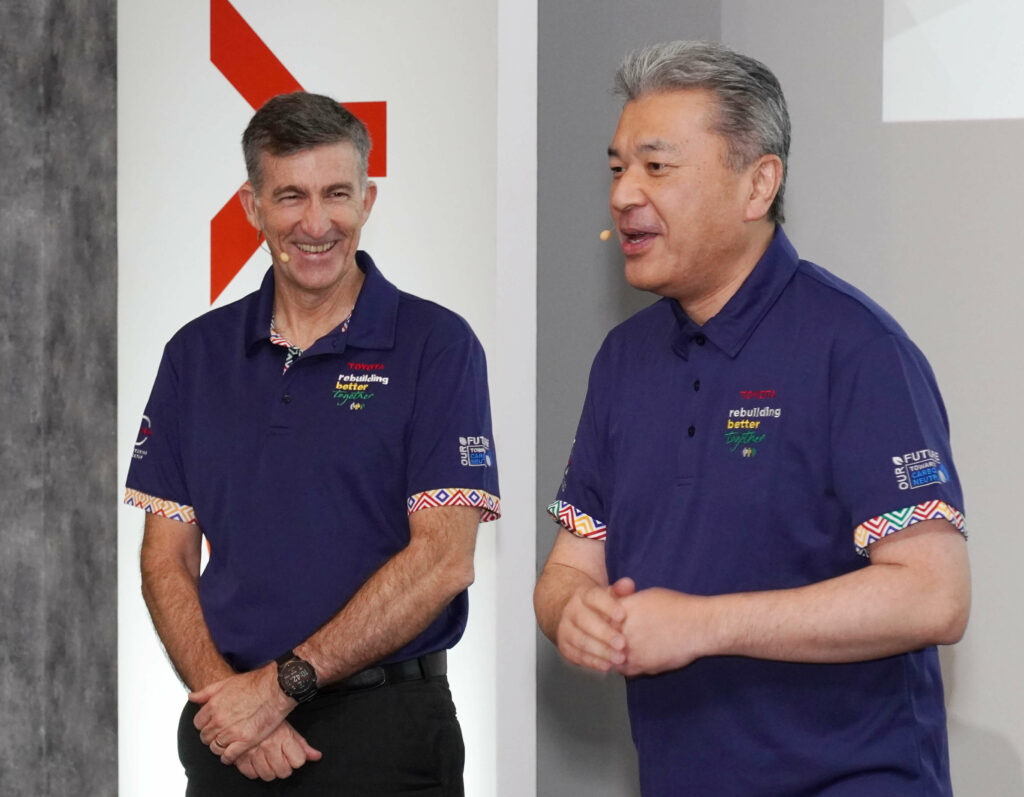
“The Mobility Society vision was developed to enhance the value of the car, expand freedom of mobility, and provide new services and energy solutions as part of the Toyota Mobility Concept. We remain firmly committed to our multi-pathway approach and will continue to tailor electrification to the needs of customers and individual regions by drawing on the strengths and characteristics of each vehicle type,” said Nakajima,Executive Vice President for Toyota Motor Corporation (TMC).
“Our chairman, Akio Toyoda, said ‘Let’s make ever better cars’ when he became CEO of Toyota in 2009. New CEO, Sato-san said, ‘Let’s change the future of cars’. Here we can clearly see ‘Inheritance’ and ‘Evolution’. We at Toyota Africa are responsible to mass-produce happiness in Africa. There are 54 countries in Africa, each with a unique environment, market and policy to consider. Therefore, with the philosophy of leaving no one behind in Africa, Toyota believes HEV is the best immediate solution for CN, considering the existing infrastructure,” said Imai, CEO of TMC Africa Region and Executive Vice President of the Toyota Tsusho Corporation (TTC),.
“As part of TTC’s ‘Industrialisation in Africa’ pillar, Durban will be positioned as a ‘mother factory’ to the rest of the continent, where parts and vehicle distribution can be further expanded into Sub-Saharan Africa,” confirmed Otsuka,Chief Operating Officer for TTC Africa Region.
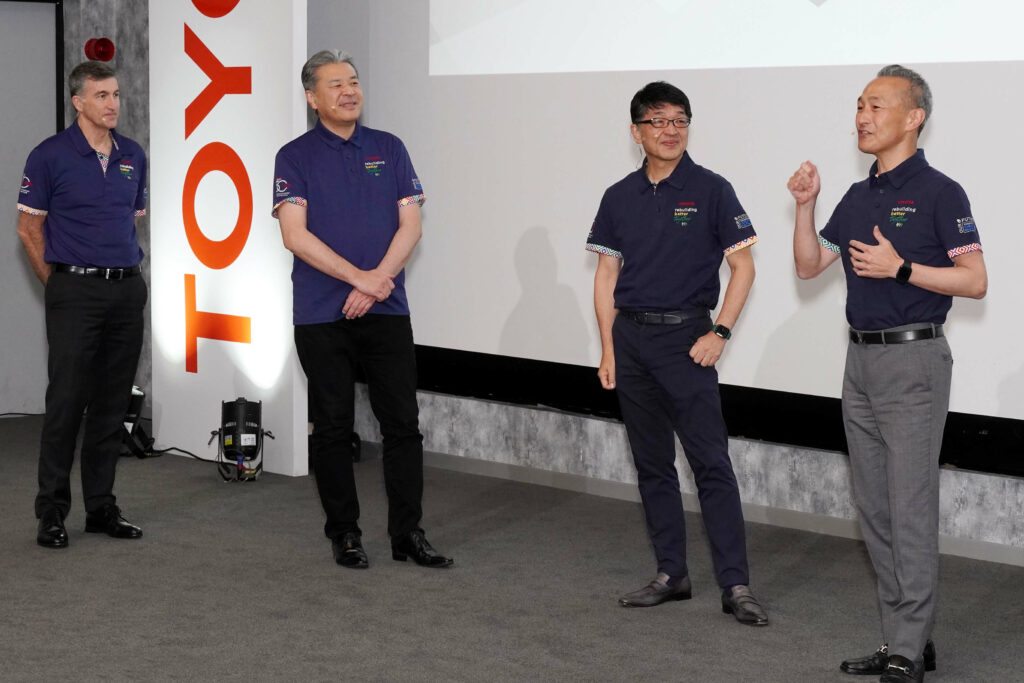
Moving to the next level, stronger together The milestone event in Durban was concluded by Andrew Kirby, President and CEO of TSAM, who provided a South African context to the new Global Management Policy. “To tie to the themes of ‘Inheritance’ and ‘Evolution,’ and following extensive strategy planning and learnings from the 2022 flood recovery, we understand that selling vehicles is no longer business as usual. TSAM recognises the risks, opportunities, and challenges on the continent due to global automotive disruptions, and we realise the need to strengthen our foundations and step-up business reforms. We have further identified the need to accelerate three key areas as mentioned by Nakajima, Imai and Otsuka. They are our CN initiatives, the relentless pursuit of the right products for all our customers and positive regional impact. Whilst we appreciate that the last three years has enabled TSAM to strengthen its foundations, we are inspired by TMC’s new guiding principles of ‘inheritance’ and ‘evolution’ and recognise that there is a lot more work to be done to accelerate change,” concluded Kirby.