

Another month has gone by, and as we enter March, let us quickly take a look at how well the car market did in terms of auto sales. Naamsa does happily admit that the month of February showed a great reception and a continuation of good momentum for domestic activity; however, there is noticeably a drop in terms of exports to the world.
Exports have weakened in the month of February 2026 with vehicle export sales at 24,221 units, reflecting a year-on-year decrease of 9,463 units, or 28,1%, compared to the 33,684 vehicles exported in the corresponding month last year. The industry’s export performance remains subject to heightened protectionism across several of South Africa’s key export markets, while increasingly stringent de-carbonisation requirements in destination markets continue to weigh on the competitiveness of South African vehicle exports.

Aggregate domestic new vehicle sales in February 2026, at 53,455 units, the best February monthly performance since 2013, reflected an increase of 5,461 units, or 11,4%, compared to the 47,994 vehicles sold in February 2025. Export sales decreased to 24,221 units, representing a loss of 28,1% compared to the 33,684 vehicles exported in February 2025.
The February 2026 new passenger car market at 37,576 units recorded an increase of 3,826 units, or 11,3%, compared to the 33,750 new cars sold in February 2025. Car rental sales accounted for 11,5% of new passenger vehicles sold during the month. Domestic sales of new light commercial vehicles (bakkies and mini-buses) at 13,218 units during February 2026 recorded an 11,9% increase compared to the 11,816 units sold in February 2025. naamsa observes that light commercial vehicle demand continues to align with conditions in the goods-producing sectors, which are gradually stabilising as energy supply improves and logistics reforms gain traction.
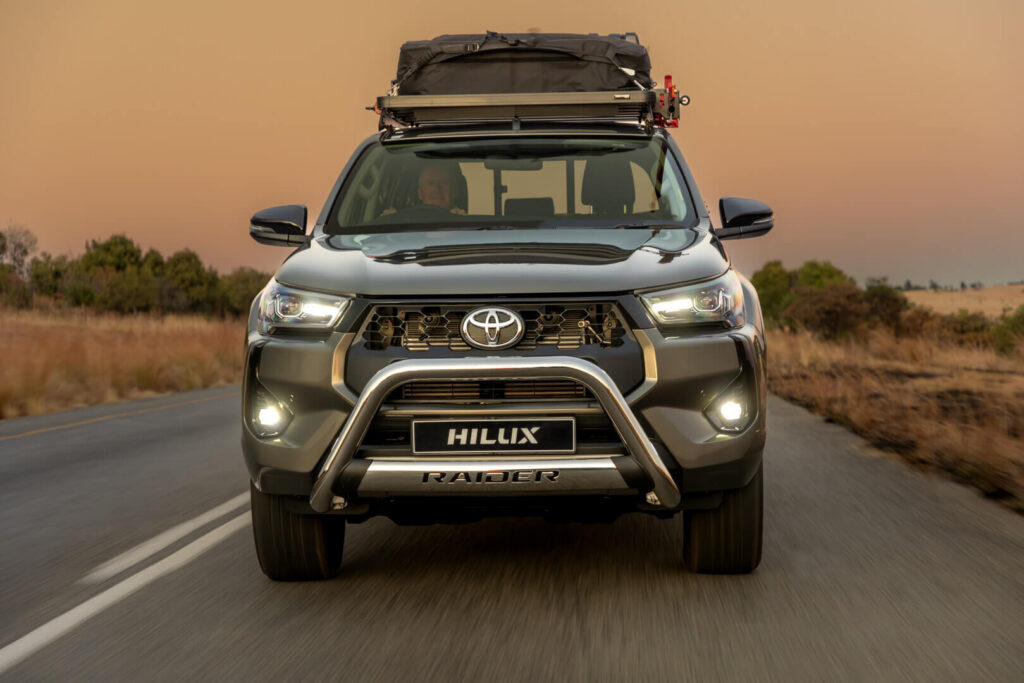
What were the top selling manufacturers you may ask? Well, here you go :
1. Toyota – 12 272 units
2. Suzuki – 6 562 units
3. Volkswagen Group – 4 895 units
4. Hyundai – 3 136 units
5. Ford – 2 928 units
6. GWM – 2 614 units
7. Isuzu – 2 371 units
8. Chery – 2 312 units
9. Mahindra – 1 996 units
10. Kia – 1 746 units
For the brands that either fell off top 10 or didn't make the cut, they sit as follows starting off with Jetour at 11th place after managing to move 1 673 units which in their books was/is a high sales count that grows into 7.9% compared to January sales. Just below them is Renault again with 1 424 units moved followed by Omoda & Jaecoo at 13th with 1 297 units and 14th is BMW who managed 1 237 units ( including the Mini brand) and to finish it off is Nissan at 15th with 1 204 units.

So then, we learn that the car market remains somewhat financially accessible despite a fuel levy increase mentioned in the 2026 Budget. Producer price inflation has slowed to 2.2%, easing factory-gate costs amid ongoing input pressures. Vehicle price inflation has moderated, supporting household purchasing power. In late 2025, the unemployment rate fell to 31.4% as employment rose, retail sales grew by 2.6% in December, and the housing market showed signs of stabilization, boosting passenger vehicle demand. While the February new vehicle sales performance remains encouraging, it unfolds against a shifting global energy backdrop and confirmed domestic cost adjustments that warrant careful monitoring.