

Volvo have shown their constant dedication to keeping their customers safe in their products by integrating all of the safety precautions and measures that are found in their ICE models into the new all-electric range. to further highlight their commitment, the Swedish brand called upon the public to come witness a first of its kind world-first three-car EV crash test.
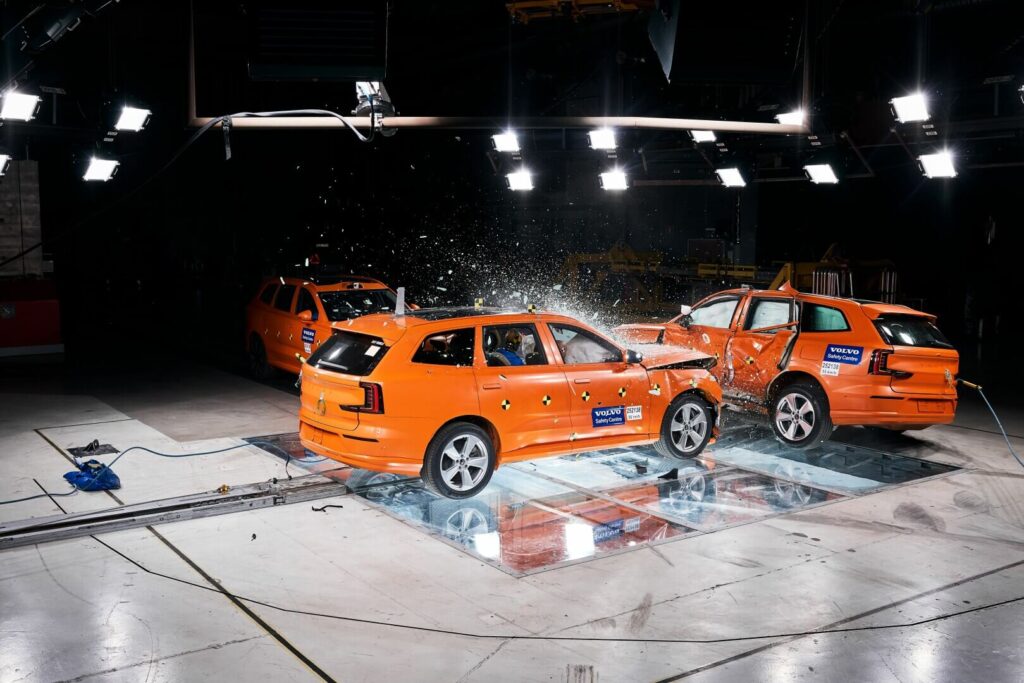
This three-car demonstration saw Volvo conduct the first public crash test with three electric vehicles in a single sequence, using the new EX90. The test went beyond regulatory requirements, simulating scenarios that no current safety rating covers, With thousands of serious crashes every year in South Africa, Volvo Car South Africa’s MD stressed the importance of testing safety from different angles to protect people in real-world situations.
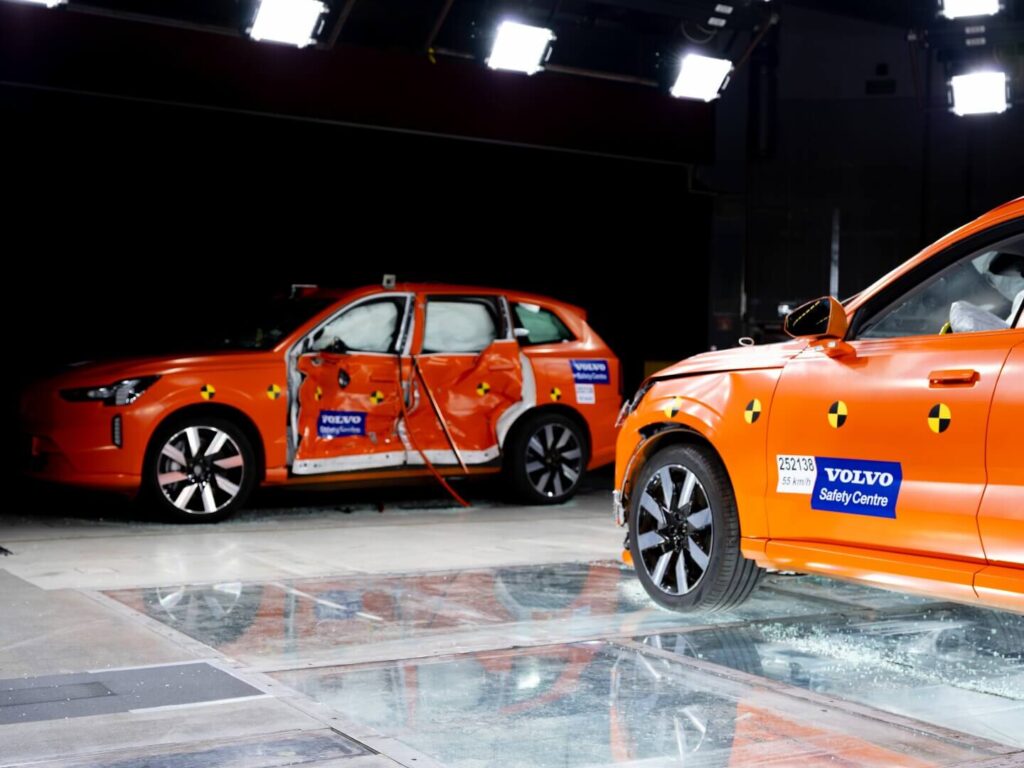
The test, launched in South Africa earlier this year, saw the first car run at 50 km/h towards the second EX90, but managed to brake to a complete stop, avoiding a collision entirely. This demonstrates the SUV’s advanced driver assistance systems, with the City Safety system bringing the car to a complete stop to prevent an accident.
“In South Africa, where more than 12,400 people died in road crashes in 2022 alone, safety cannot just be about meeting the minimum requirements,” commented Grant Locke, Managing Director of Volvo Car SA.

Then, a third car, travelling at 55 km/h, hit the second car on the side, colliding in the middle where the occupants were seated. “The car engaged its safety cage, and that helped transfer the loads while managing to deform and absorb the energy from this violent crash. Of course, the side airbags and inflatable curtains were also activated immediately at the impact, and that helped to protect the occupants,” commented Thomas Broberg, Senior Technical Advisor Safety, at Volvo Cars.
According to data collected from the cars and crash test dummies, there would have been no serious injuries to the occupants, highlighting the crash protection of Volvo vehicles like the EX90. “The test is a great example of how we can cover a wide range of scenarios than what is required to achieve five stars in any rating. It is essential to meet our pioneering safety standard, for safety in the real world,” added Broberg.